


Your new micro pumps meets all the flow and pressure specs, but it fails within weeks in the field. The materials are corroded or swollen, stopping your project cold and ruining your device’s reputation.
Micro pumps must be selected based on the medium because chemicals can physically attack and destroy the pump’s internal wetted components, like the diaphragm and valves. This leads to leaks, performance degradation, and premature failure that flow and pressure specs alone cannot predict.
As an engineer at JSG DC PUMP, one of the most common and costly mistakes I see is engineers selecting a pump based only on its datasheet performance. They run tests with air or pure water, and everything looks great. Then they put the pump into their real-world application with a specific chemical, ink, or cleaning agent, and it fails catastrophically. The pump wasn’t wrong for the flow rate; it was wrong for the fluid. Understanding the interaction between the medium and the pump’s materials is just as critical as hitting your performance numbers. Let’s explore why.
Why Do Engineers Default to Flow and Pressure Metrics First?
You have a project deadline and need to choose a pump. Datasheets are filled with performance charts, so you find one that matches your required flow and pressure, and you move on.
Engineers default to flow and pressure because these are the primary functional outputs of the pump. They are the most tangible metrics on a datasheet and directly correspond to the system’s primary task, making them the easiest and fastest criteria for initial selection.
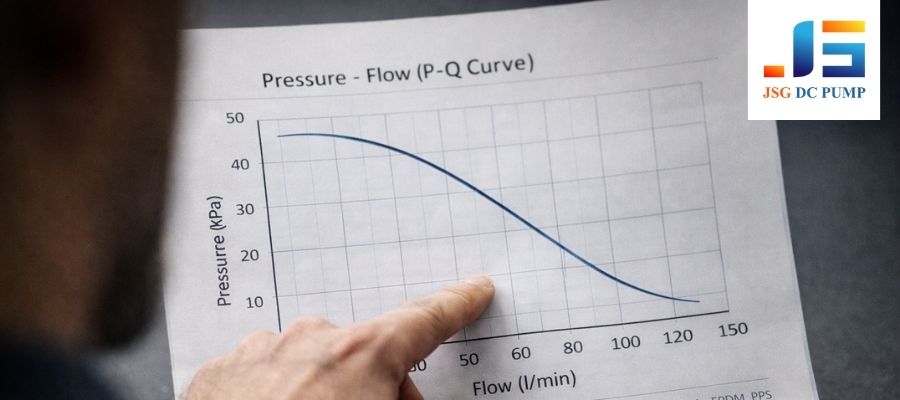
It’s completely understandable why this happens. Flow and pressure are the “what a pump does” metrics. Does it move enough liquid per minute? Can it generate enough vacuum to lift a component? These are the first questions any designer needs to answer. In engineering school and on every supplier website, performance curves are front and center. They are quantifiable, easy to test, and directly relate to the cycle time or therapeutic delivery of the end device. The material specification, often listed as just a string of acronyms like “EPDM” or “FKM,” seems like a secondary detail. This creates a critical blind spot where engineers assume that if the performance is right, the pump is right. Unfortunately, this assumption is the root cause of many field failures.
What Happens When a Micro Pump’s Materials React with a Liquid Medium?
Your liquid pump is losing pressure and starting to leak. You take it apart and find the internal rubber parts are swollen and gummy, or brittle and cracked, completely destroying the pump’s seal.
When a pump’s materials are incompatible with a liquid, a chemical attack occurs. Aggressive solvents can cause the diaphragm to swell and lose its shape, while acids can make the rubber brittle, leading to leaks, flow reduction, and complete pump failure.
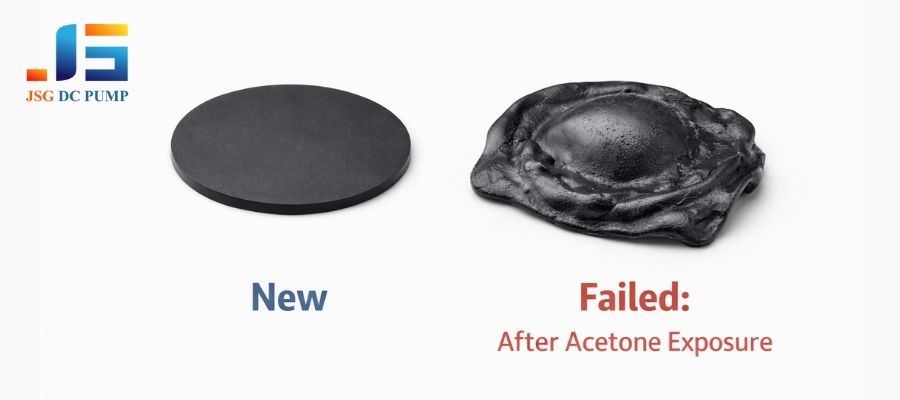
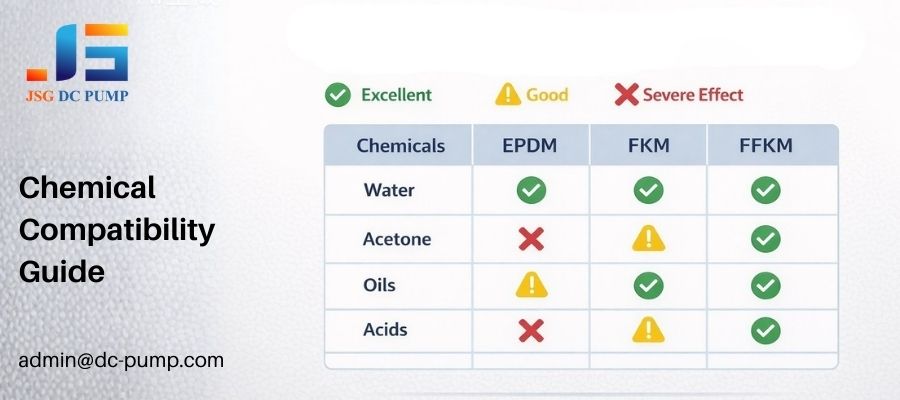
This is where the theoretical performance on the datasheet meets the harsh reality of chemistry. The “wetted path” of a pump includes all the internal components that the liquid or gas touches—typically the pump head, the diaphragm, and the valves. If these parts are made from a material that reacts with your medium, disaster is inevitable. For example, EPDM is a fantastic, long-lasting material for water-based media. But if you try to pump a hydrocarbon-based solvent like acetone through it, the EPDM will absorb the solvent, swell up like a sponge, and lose all its elasticity. The pump will stop working almost immediately. The opposite is also true: FKM is great for oils and solvents but can be attacked by certain ketones or bases.
Mini Pumps Common Liquid Incompatibility Failures
| Material | Compatible Medium | Incompatible Medium | Failure Mode |
|---|---|---|---|
| EPDM | Water, Glycol, Brake Fluid, Alcohols | Oils, Solvents (Acetone, Toluene) | Swelling, loss of elasticity, sticking valves. |
| FKM (Viton®) | Oils, Fuels, Solvents, Mild Acids | Ketones, Strong Bases, Steam | Brittleness, cracking, loss of sealing. |
| FFKM (Kalrez®) | Extremely wide chemical resistance. | High cost is the main limitation. | Cost-prohibitive for most applications. |
What About Gases? Are They a Risk to Micro Pumps Materials Too?
You might think that gases are harmless, but your pump is failing unexpectedly in a humid or industrial environment. The performance is degrading much faster than the lifespan rating would suggest.
Yes, gases can be a significant risk. High humidity can cause internal condensation and corrosion, while gases like ozone or chlorine are highly reactive and can rapidly degrade rubber components, leading to premature diaphragm or valve failure.
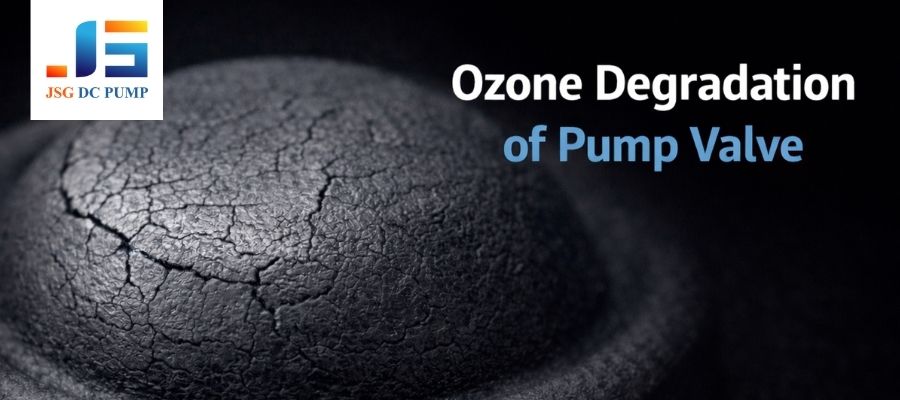
It’s a common misconception that if a pump is only moving gas, the material choice doesn’t matter as much. This is incorrect, especially in real-world conditions. One of the most common issues is ozone. Ozone is present in the atmosphere and is also generated by electrical equipment. It is extremely aggressive towards standard rubbers like NBR, causing them to become brittle and crack. Another major issue is humidity. A pump pulling in warm, moist air can cause condensation to form inside the pump as the air expands and cools, leading to corrosion on the motor bearings or other metal parts. In industrial or analytical applications, the sample gas itself could be corrosive, like sulfur dioxide (SO₂) or chlorine (Cl₂), which requires highly specialized material selection to avoid immediate failure.
How Do a Medium’s Physical Properties Affect the Pump?
You are trying to pump a thick ink or a liquid containing small particles. The pump is stalling, and the flow rate is much lower than what the datasheet promised with water.
A medium’s physical properties, like viscosity and the presence of particulates, directly impact pump performance and lifespan. High viscosity requires more motor torque to move, while particulates can clog valves or cause abrasive wear on internal components.
A pump’s flow and pressure ratings are almost always determined using clean water or air. These are low-viscosity, particle-free fluids. If your medium is different, that performance curve is no longer accurate.
- Viscosity: This is a measure of a fluid’s thickness or resistance to flow. Pumping a high-viscosity fluid like honey or a thick ink requires much more force than pumping water. This puts a higher load on the pump’s motor, increasing current draw and heat. If the pump’s motor is not powerful enough, it may stall or run at a much lower speed, dramatically reducing the flow rate.
- Particulates: If your medium contains solid particles, they pose two major risks. First, they can get stuck in the small pump valves, preventing them from closing properly and causing a complete loss of pressure. Second, if the particles are abrasive, they will act like sandpaper on the diaphragm and valves, causing rapid mechanical wear and reducing the pump’s operational lifespan.
How Can an Incompatible Medium Silently Destroy Pump Lifespan?
Your pump passes all initial tests, even with the correct chemical. But six months into deployment, field units start failing, even though they are well within the pump’s rated 5,000-hour lifespan.
An incompatible medium can cause slow, cumulative damage that isn’t obvious in short-term testing. A mild chemical attack can slowly reduce the diaphragm’s elasticity over hundreds of hours, eventually causing it to fatigue and rupture far earlier than its rated lifespan.
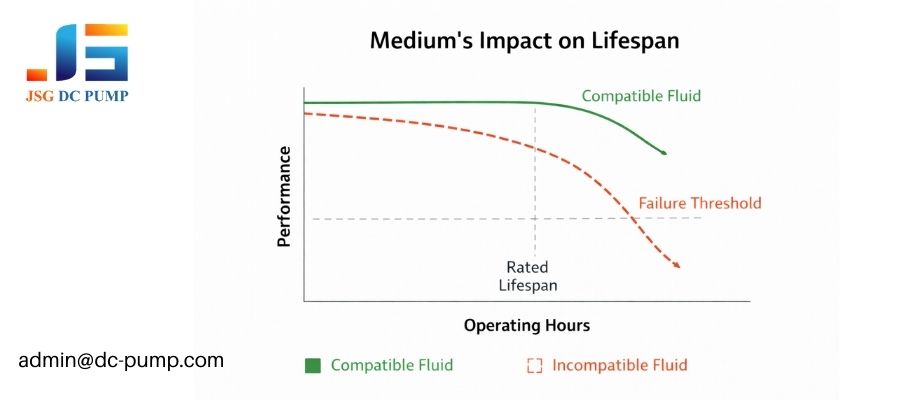
This is one of the most dangerous and expensive failure modes because it happens long after the product has shipped. A short, 24-hour soak test might not show any obvious swelling or damage. But over hundreds of hours of operation, the chemical is slowly breaking down the polymer chains in the rubber diaphragm. It loses a tiny bit of its rebound force with every cycle. As the material weakens, stress concentrates in certain areas, and eventually, a tear forms. To the end-user, the pump just “died for no reason.” In reality, it was dying a slow death from the very first day due to an incorrect material choice. This is why long-duration life testing with the actual end-use medium is not just recommended; it’s absolutely essential for any reliable device.
How Do You Correctly Match Pump Materials to Your Medium?
You understand the risks, but looking at a list of chemicals and plastics is overwhelming. How do you confidently choose the right pump materials for your specific application?
The process involves identifying your medium, checking it against a chemical compatibility chart, considering the operating temperature, and consulting with the pump manufacturer. This systematic approach ensures you select a material that provides both compatibility and a long lifespan.
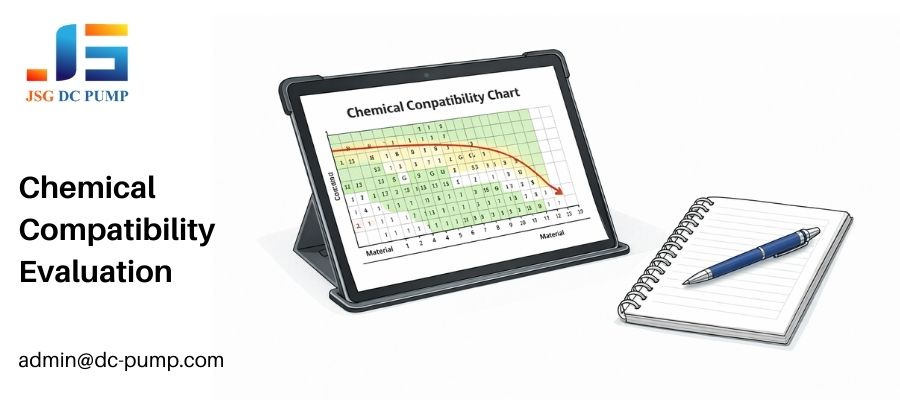
Selecting the right material doesn’t have to be a guessing game. It’s a methodical engineering process. First, list every chemical in your medium, even those in small concentrations. Next, use a trusted chemical compatibility chart to cross-reference your chemicals with common pump materials like EPDM, FKM, NBR, and FFKM. Pay close attention to the ratings (e.g., A=Excellent, D=Severe Effect). Remember that temperature plays a huge role; a material that is compatible at room temperature might fail at 60°C. When in doubt, the best course of action is to speak directly with an application engineer at your pump manufacturer. We have seen thousands of different applications and can often provide guidance based on direct experience with fluids similar to yours.
Material Selection Checklist:
- Identify All Chemicals: List every component of your liquid or gas medium.
- Check Compatibility Charts: Use online resources or manufacturer data to check for interactions.
- Consider Temperature: Verify compatibility at your maximum operating temperature.
- Evaluate Physical Properties: Account for viscosity and the presence of any solids.
- Consult the Experts: Contact your pump supplier’s engineering team for a final recommendation.
How Does JSG DC PUMP Help Prevent Medium-Related Failures?
You need a pump, but you also need confidence that it will last. How can you leverage a supplier’s expertise to de-risk your design and ensure long-term reliability in the field?
JSG DC PUMP acts as an engineering partner, not just a vendor. We help you select the right pump materials based on our extensive application experience and can provide samples for you to conduct long-term life testing with your specific medium.
We believe our job is to ensure your product succeeds in the field. This goes far beyond just selling you a pump that meets a flow spec. Our process starts with a deep dive into your application. We ask the critical question: “What exactly are you pumping?” Our engineers will guide you through the material selection process, using our internal knowledge base of how our pumps perform with thousands of different media.
We will recommend the best material combination—like an FKM diaphragm with FFKM valves for an aggressive solvent application—and provide you with sample pumps. We strongly encourage our clients to perform their own life tests with these samples and their end-medium. This collaborative approach ensures that the pump you design into your product is not only a match on paper but is proven to be reliable in your real-world application.
Conclusion
Choosing a micro pump based on flow and pressure alone is a recipe for failure. The medium is an active variable that can destroy a pump from the inside out. A successful design requires a holistic approach, matching both performance and material compatibility to ensure long-term reliability.
At JSG DC PUMP, we go beyond datasheets. Our application engineers support medium-specific material selection, chemical compatibility review, and long-term life testing using your actual fluids or gases—so risks are identified before your product reaches the field.
Contact us for application support and material validation:
Email: admin@dc-pump.com
