

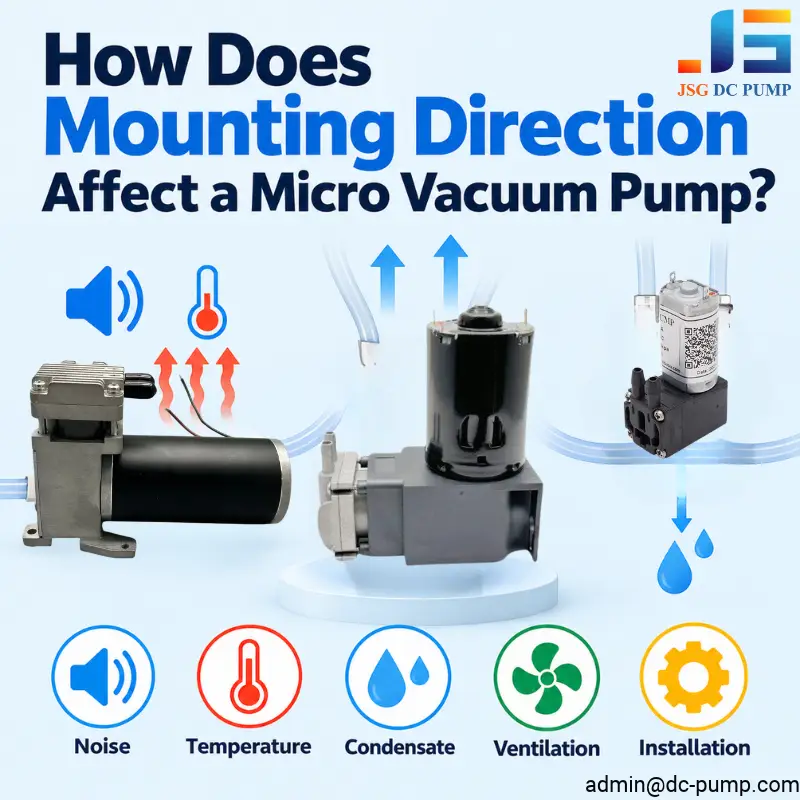
Mini vacuum pump installation becomes difficult when a compact analyzer has no room for horizontal mounting. The pump fits vertically or inverted. Could changing its direction create drainage or cooling problems?
Yes, some mini vacuum pumps can operate vertically or upside down, but only if the manufacturer permits it for that model. Oil-free operation alone is not proof. Tubing, drainage, support, and cooling must also be suitable.
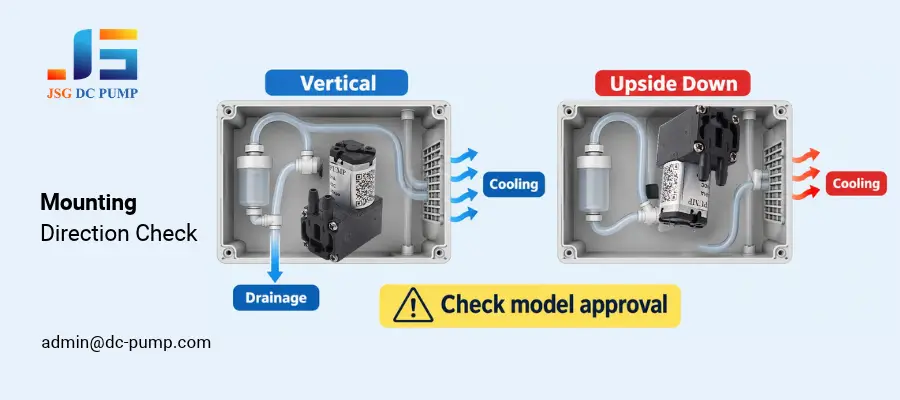
In my years working with miniature pumps, I have learned that a successful bench run does not approve a new mounting orientation. I check the operating conditions, then verify performance in the complete OEM equipment.
Can Every Mini Vacuum Pump Operate in Any Position?
During enclosure design, engineers sometimes rotate a pump until its mounting holes line up. The arrangement looks convenient, and a brief test may show normal suction. That does not establish long-term suitability.
No. Permitted mounting directions differ between models. Some oil-free diaphragm pumps tolerate multiple orientations, while others have restrictions associated with the motor, head configuration, drainage, or mounting hardware.
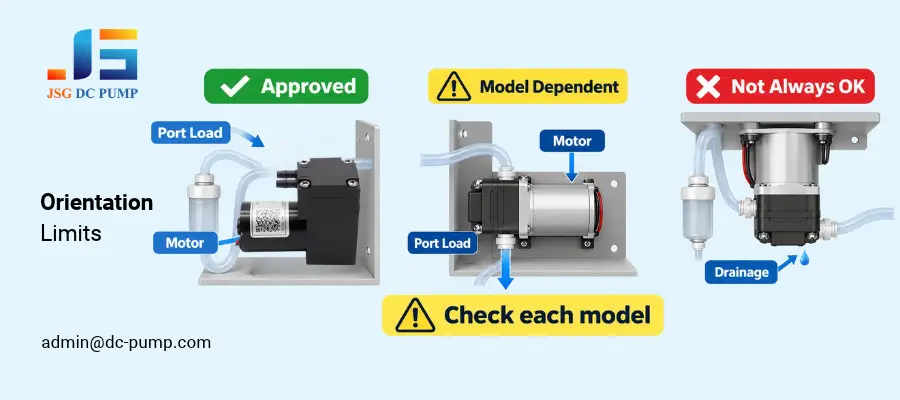
A pump that starts in a position is not necessarily approved to operate there throughout its service life. An inverted unit might produce acceptable vacuum during a dry-air test but trap liquid near a valve when humid gas is introduced. Tubing weight can also stress the ports. I therefore treat orientation as a model-specific requirement, never something inferred from appearance or another pump.
How Does Mounting Direction Affect Mini Vacuum Pump Installation?
Changing orientation may solve a space problem while creating a drainage or support problem.
The main differences concern condensate location, tubing strain, mechanical fastening, and airflow around the motor. The direction alone does not reliably predict which installation will deliver better vacuum.
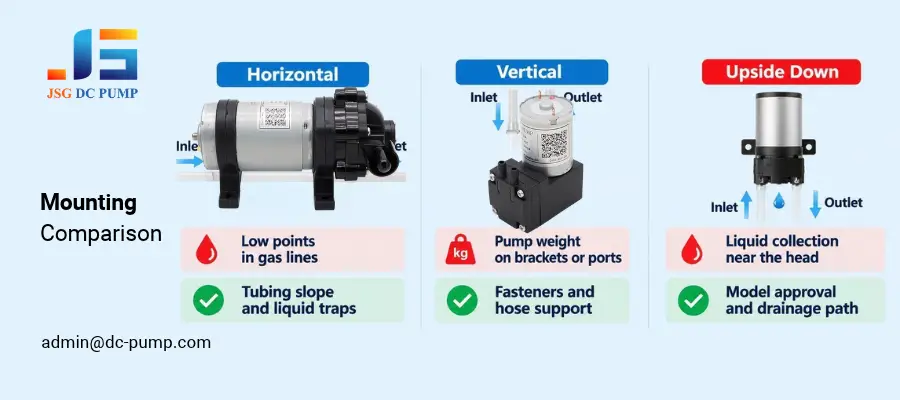
Compare the proposed layout using this checklist:
| Orientation | Possible Issue | Engineering Check |
| Horizontal | Low points in gas lines | Tubing slope and liquid traps |
| Vertical | Pump weight on brackets or ports | Fasteners and hose support |
| Upside down | Liquid collection near the head | Model approval and drainage path |
How Does Mounting Direction Affect Condensate?
An air-sampling pump may draw humid gas through cooler tubing. Condensation can form despite the application being described as air handling.
Mini vacuum pump installation orientation influences where condensate collects and whether it drains away. Liquid can obstruct passages or affect valve sealing. KNF’s guidance on condensate emphasizes drainage, but does not establish approval for JSG models.
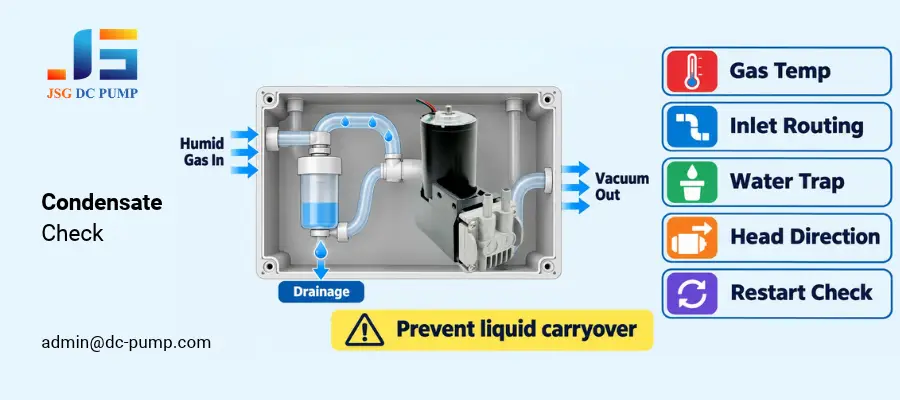
For a potentially wet gas stream, I check the following:
1. Gas Temperature: Identify where cooling may cause condensation, including during shutdown.
2. Inlet Routing: Avoid low loops that store liquid and later feed it toward the pump.
3. Water Collection: Use an appropriate upstream trap when liquid carryover is possible.
4. Pump-Head Direction: Follow the model’s specified port and drainage arrangement.
5. Restart Conditions: Confirm that pooled liquid cannot migrate backward when suction stops.
Can Vertical Installation Increase Noise or Temperature?
A pump may run quietly on a bench but become hot or noisy inside an enclosure. Rotation changes bracket contact, hose tension, and ventilation clearance.
Vertical or inverted mounting does not necessarily reduce airflow or vacuum. However, poor ventilation or rigid brackets can increase heat and noise. See JSG’s miniature pump integration guide for related considerations.
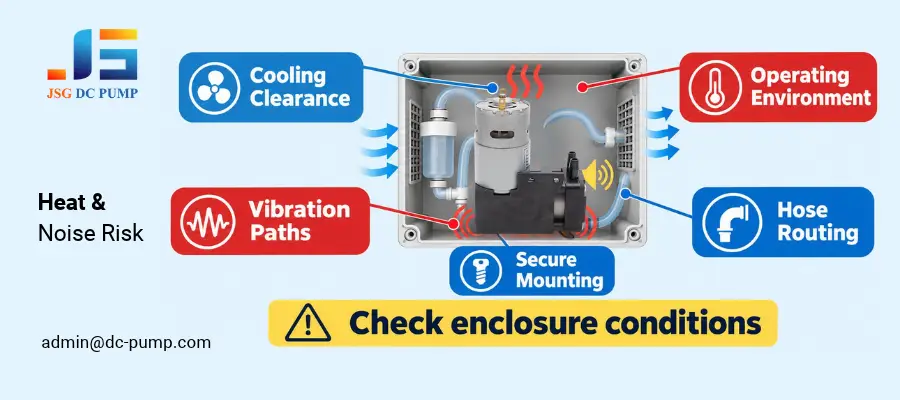
During an OEM installation review, I verify:
1. Cooling Clearance: Keep ventilation openings clear and measure temperature under the expected load.
2. Secure Mounting: Support the pump at designated fixing points, not through hoses or wires.
3. Vibration Paths: Check whether the bracket excites panels or touches adjacent components.
4. Cable and Hose Routing: Avoid sharp bends, pulling forces, and contact with hot surfaces.
5. Operating Environment: Consider enclosure temperature and how long the pump runs per cycle.
How Should Engineers Verify a New Mounting Orientation?
A pump may pass a short bench test yet develop problems after repeated starts or sustained operation.
Verify the proposed mounting position against an approved baseline, using the same pump configuration, terminal voltage, gas path, and working load. Compare measured results with written acceptance limits.
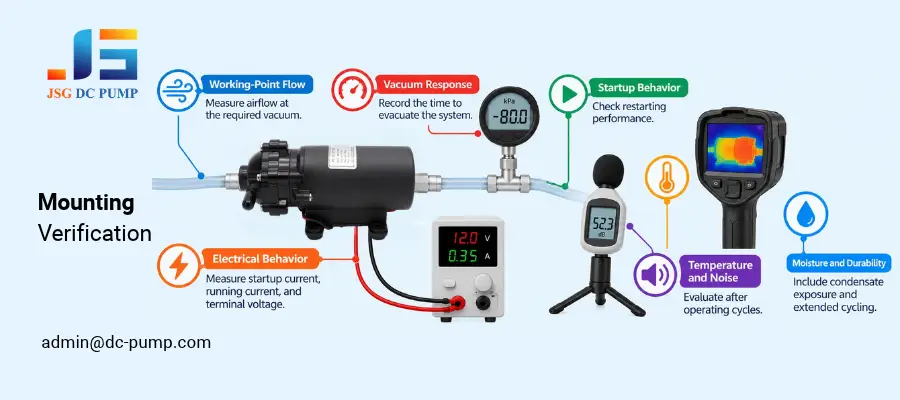
Approve the complete mounting configuration, including tubing and brackets, rather than the pump alone. My recommended checks are:
1. Working-Point Flow: Measure airflow at the required vacuum, not just unrestricted flow.
2. Vacuum Response: Record the time needed to evacuate the actual system volume.
3. Startup Behavior: Check restarting against the expected residual pressure difference.
4. Electrical Behavior: Record startup current, running current, and voltage at the terminals.
5. Temperature and Noise: Evaluate behavior after representative operating cycles.
6. Moisture and Durability: Include condensate exposure and extended cycling when relevant to the application.
What Should You Send JSG Before Choosing a Mounting Direction?
Once tooling is complete, changing brackets, tubing, or wiring becomes expensive. Orientation should be discussed early.
JSG can review your mini vacuum pump installation layout and help determine what documentation or sample testing is necessary. A recommendation must apply to the exact pump model and operating conditions.
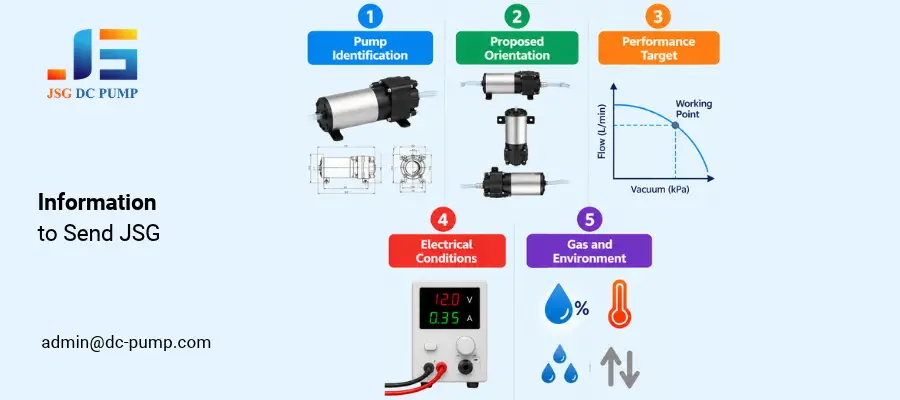
Please provide:
1. Pump Identification: Model number, photographs, and mechanical drawing.
2. Proposed Orientation: A sketch showing motor, pump head, ports, and bracket.
3. Performance Target: Working vacuum and airflow at the required operating point.
4. Electrical Conditions: Voltage range, startup requirements, and duty cycle.
5. Gas and Environment: Humidity, possible condensate, temperature, and equipment movement.
Conclusion
A mini vacuum pump may operate vertically or upside down, depending on its design. OEM engineers should verify mounting requirements, drainage, cooling, and performance before installation.
JSG provides technical support and customized mini vacuum pump solutions for OEM applications. Contact us at admin@dc-pump.com with your installation requirements.
