

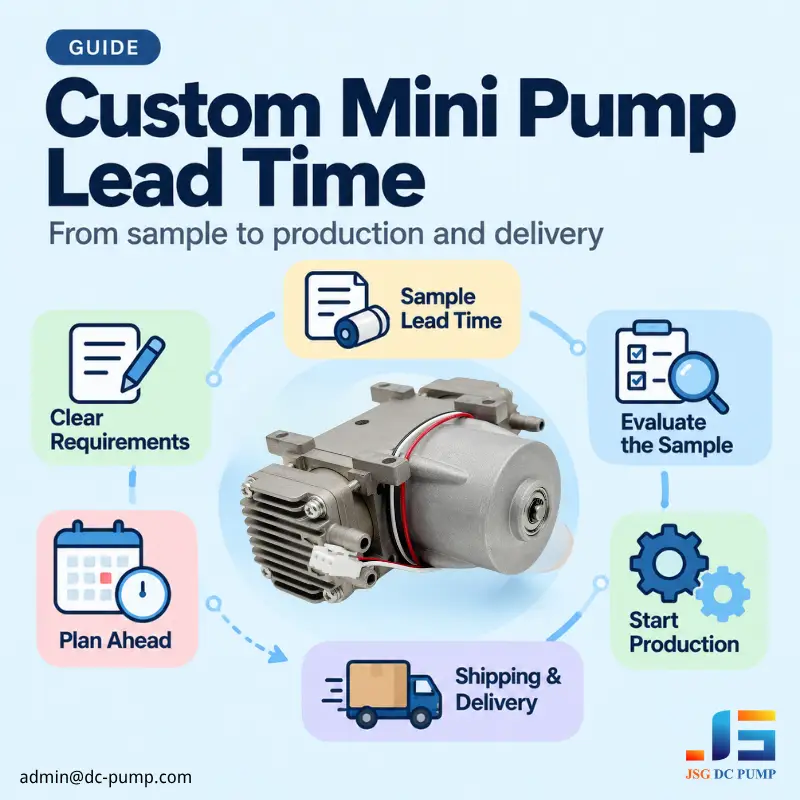
Your product launch date is approaching, and you need to know when a custom mini pump will be ready. An uncertain lead time makes it difficult to plan testing, place production orders, or confirm delivery dates with your customers.
For instance, a custom mini pump based on an existing model might reach the sample stage within a matter of weeks. Though a new design needs a schedule all on its own, which takes longer. The entire project timeline also consists of sample evaluation, batch production and shipping. Getting the first sample doesn’t mean the entire order has been completed.
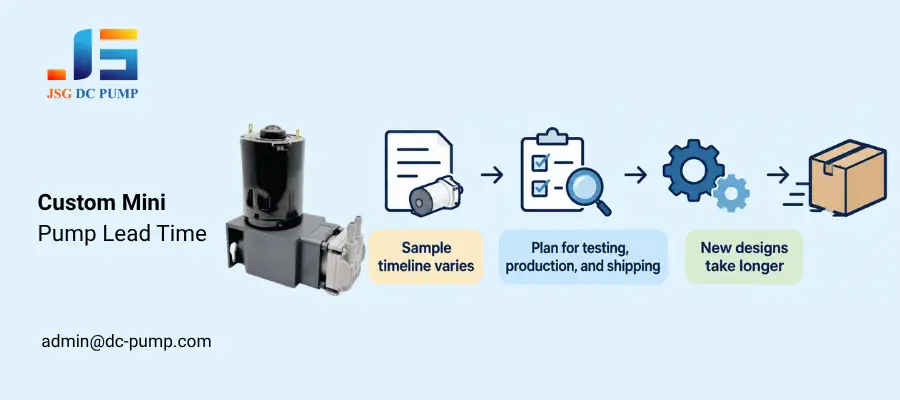
In the past, when I have worked on projects incorporating mini pumps, it’s most useful to start by defining what is a “custom”. More work is required to create a new pump structure as opposed to just changing a connection, and defining the request is more efficient than buying brand new directly from the manufacturer.
What Can You Change on a Custom Mini Pump?
Start by listing exactly what should change. A different label, a longer cable, and a newly designed pump head are all customization requests, but they follow different development paths.
The manufacturer needs to identify which changes can use existing components and which require additional development. The following comparison helps explain why schedules vary.
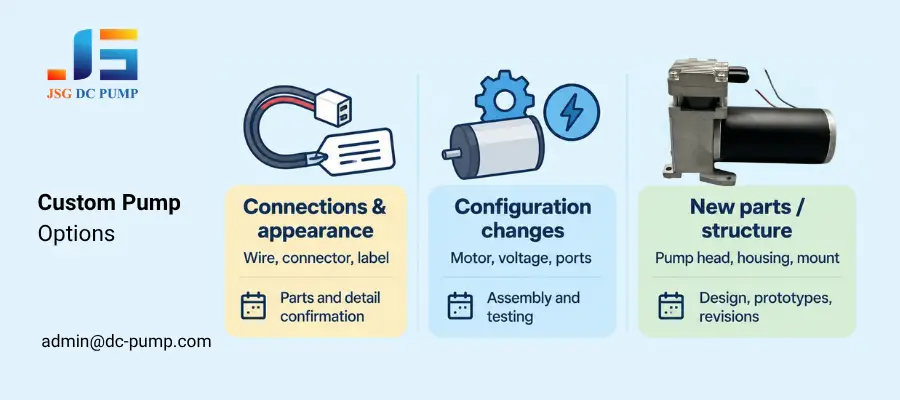
| Customization level | Examples | What affects the schedule |
| Connections and appearance | Wire length, connector, label, packaging | Availability of parts and confirmation of details |
| Available configuration changes | Supported motor, voltage, or port options | Component preparation, assembly, and testing |
| New parts or structure | Custom pump head, housing, or mounting structure | Design, prototypes, possible tooling, and revisions |
Ask the supplier to identify the development route before confirming a delivery date. A change that looks small from the outside may still require new parts or additional checks.
When Will Your Custom Mini Pump Sample Be Ready?
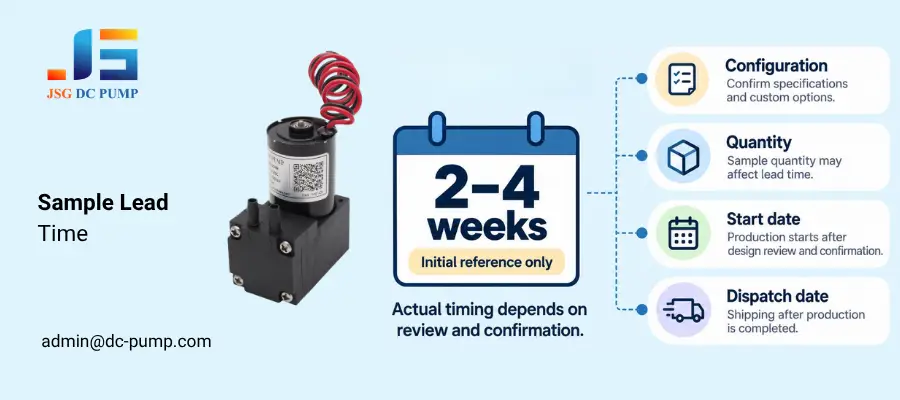
JSG’s published vacuum-pump guide mentions 2–4 weeks as a possible custom development period. This is an initial reference, not a guaranteed schedule for every custom mini pump. The selected model and requested changes must be reviewed first.
Ask what starts the quoted period: payment, drawing approval, final requirement confirmation, or receipt of a special component. The sample quotation should clearly identify:
1. Configuration: Which version will be supplied?
2. Quantity: How many samples are included?
3. Starting point: When does the quoted period begin?
4. Dispatch date: When is the sample expected to leave the factory?
Also confirm whether the sample uses the parts and manufacturing methods planned for production. An early prototype may help assess an idea while leaving further development to complete.
What Happens After the Sample Arrives?
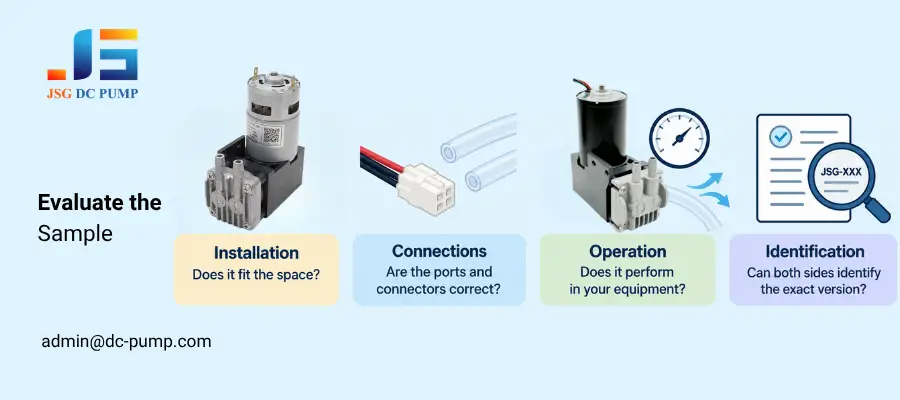
Your team needs time to evaluate the sample in the intended product. Check whether it fits, connects correctly, and performs the required task. Running the pump on its own is only an initial check.
Before approving the sample, review these practical points:
1. Installation: Does it fit the available space?
2. Connections: Are the wires, connectors, and ports correct?
3. Operation: Does it perform properly in your equipment?
4. Identification: Can both sides identify the exact version tested?
Send clear feedback if something needs changing. Photographs, measurements, and a short explanation help the manufacturer respond. A revised sample may require another evaluation, so include that possibility in the project schedule.
When Can Custom Mini Pump Production Begin?
An approved sample does not automatically mean a production batch is available. The manufacturer still needs to confirm component availability, order quantity, and the production schedule for your configuration.
Request a separate production lead time when placing the batch order. If you need a small initial batch before a larger purchase, discuss that arrangement early so both stages can be planned.
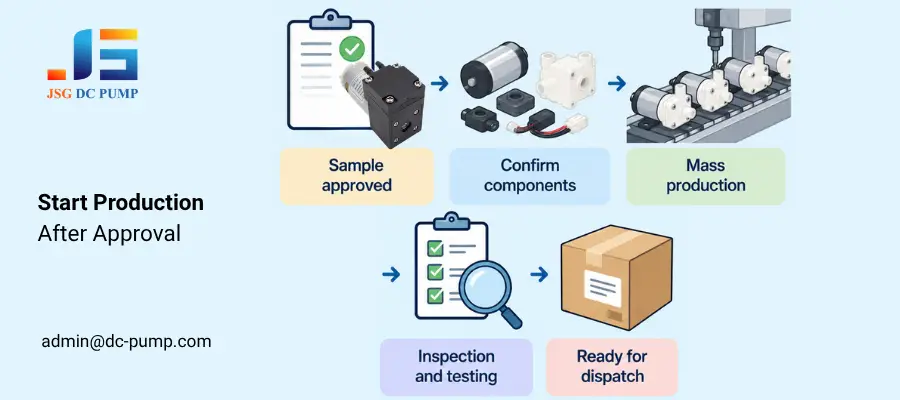
Confirm when production can begin, when inspection will finish, and when the batch can be dispatched. Record which approved sample or specification the order must follow, including labeling and packaging details.
Does the Lead Time Include Shipping?
Check whether the quoted date means ready at the factory, dispatched, or delivered to your address. These are different milestones, particularly when ordering internationally.
Request a transport estimate based on your destination and shipment details. Carrier tools, such as DHL’s shipping quote service, can help you explore shipping options separately from manufacturing.
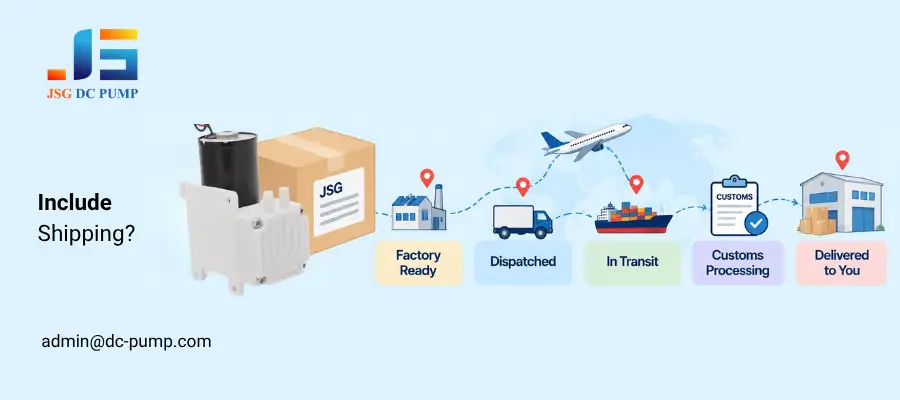
Tell the supplier when you need the pumps at your facility. Your purchasing plan should allow for manufacturing, transport, and customs processing rather than treating the factory dispatch date as the arrival date.
How Can You Avoid Unnecessary Delays?
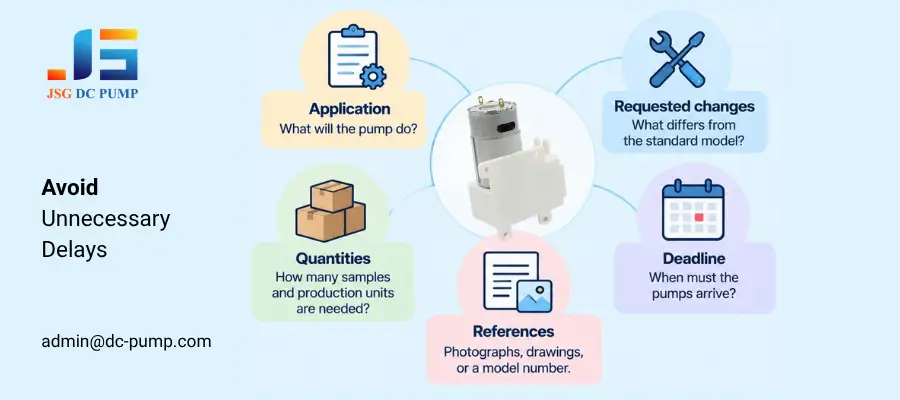
Provide a clear project brief at the beginning. Explain which requirements are essential and which are flexible. Ask whether an existing configuration can meet your needs with fewer changes.
You do not need a complicated document to start the discussion. Include:
1. Application: What will the pump do?
2. Requested changes: What differs from the standard model?
3. Quantities: How many samples and production units are needed?
4. Deadline: When must the pumps arrive?
5. References: Available photographs, drawings, or an existing model number.
Assign someone to answer questions and review samples promptly. Before final approval, check the configuration, connections, labeling, and packaging together. Changes requested afterward may affect the agreed schedule.
Conclusion
The time needed to make a custom mini pump depends on the changes involved and the steps required before production. Plan separately for sample preparation, your evaluation, batch manufacturing, and shipping. A schedule tied to these milestones gives you a clearer basis for planning your product launch.
At JSG, we can review your application and discuss a suitable customization route. Send your requested changes, quantities, and target delivery date to admin@dc-pump.com so we can assess the project and confirm the applicable sample and production schedule.
