

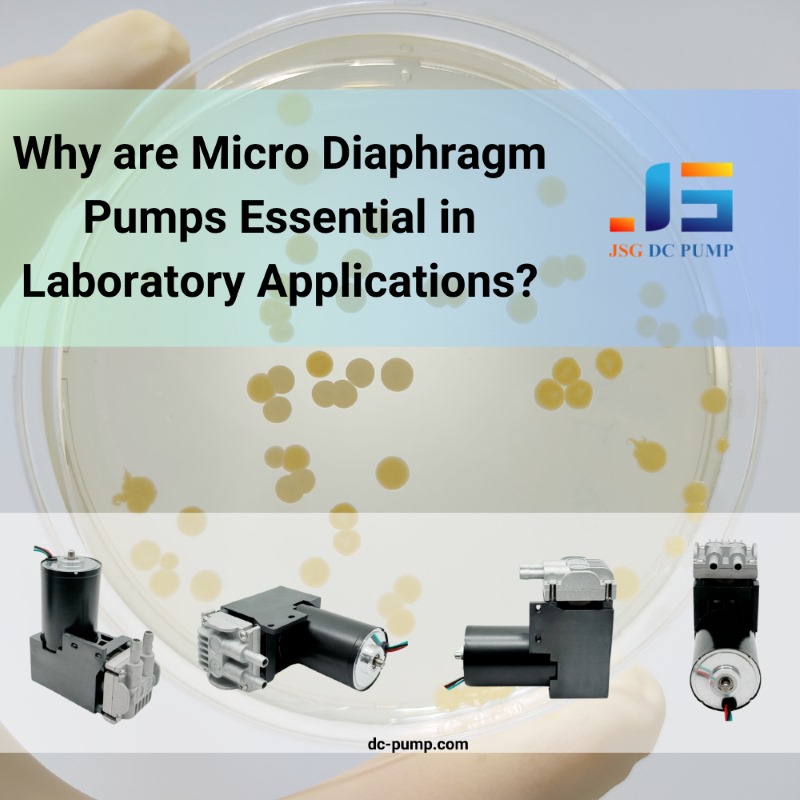
Micro diaphragm pumps can support laboratory gas sampling, vacuum-assisted aspiration and liquid transfer, but the correct pump depends on the fluid circuit. Separate a gas pump that creates suction from a liquid pump that directly contacts a reagent or waste stream. Then check flow at the actual pressure or vacuum, media compatibility and operating cycle.
This guide focuses on selecting and validating those functions inside laboratory equipment. A compact diaphragm design alone does not establish dosing accuracy, sterility, solvent compatibility or continuous-duty capability. Each needs evidence for the selected pump configuration and complete instrument.
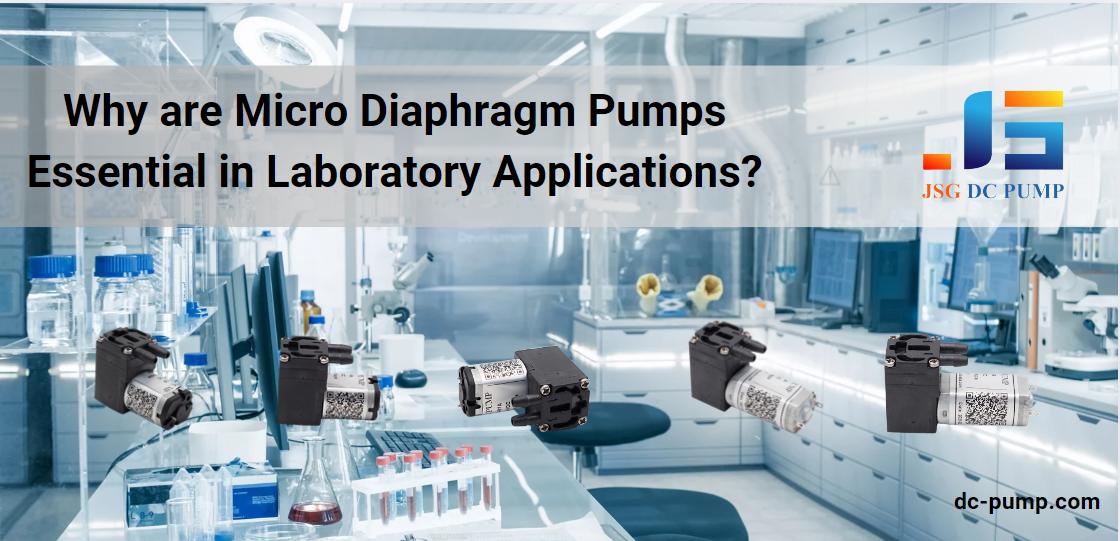
Match the Pump to the Laboratory Function
| Laboratory function | What the pump must do | What to validate in the instrument |
|---|---|---|
| Vacuum-assisted waste aspiration | Evacuate the air space in a collection vessel | Suction response, vessel sealing, liquid carry-over protection and behaviour as the vessel fills |
| Gas sampling | Move the sample through the installed circuit | Delivered flow with tubing and filters fitted, leakage and changes to the sample |
| Wash-liquid transfer | Deliver a compatible cleaning liquid | Flow against circuit resistance, wetted materials and cleaning sequence |
| Reagent replenishment | Transfer liquid between reservoirs | Priming, bubbles, residual liquid and changing reservoir levels |
| Vacuum-assisted degassing | Support a dedicated degassing arrangement | Required vacuum, vapor exposure and separation from liquid |
| Timed liquid dosing | Deliver repeatable quantities during commands | Volume per cycle, valve timing, startup delay and behaviour after idle periods |
These are general engineering functions, not claims that every JSGDCPUMP model suits every laboratory process.
Separate Suction Performance from Contamination Control
A waste-aspiration circuit can use a gas pump downstream of a collection vessel, so the pump moves air while the vessel collects liquid. The vessel, overflow protection, filters and tubing are part of the system design. A gas pump does not become a liquid pump simply because it provides suction. Check what could reach it during foaming, overfilling, a blocked line or an unexpected stop.
For cell-culture-related equipment, an oil-free pump is not a substitute for a validated sterile fluid path. Cleaning, disinfection, filtration and material compatibility must be assessed for the intended process. Do not infer sterile performance from pump size, diaphragm construction or a general quality certificate.
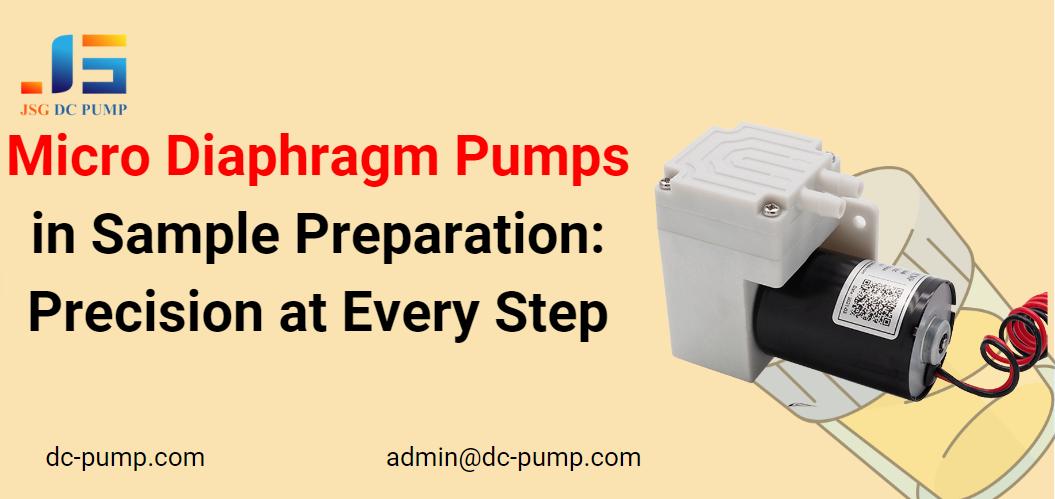
Separate Flow Control from Dosing Accuracy
A stable average flow does not automatically produce an accurate dose. For short dispensing commands, starting delay, residual pressure, valve behaviour and trapped air affect delivered volume. Validate the smallest intended dose after repeated cycling and after the longest expected idle period. If an accuracy is required, specify the measurement method and acceptance limit before approving the pump.
For direct liquid contact, identify all wetted parts and the actual liquid conditions. Check compatibility through the operating and cleaning sequence. Test priming and air-bubble recovery instead of assuming a test with water proves suitability for every reagent.
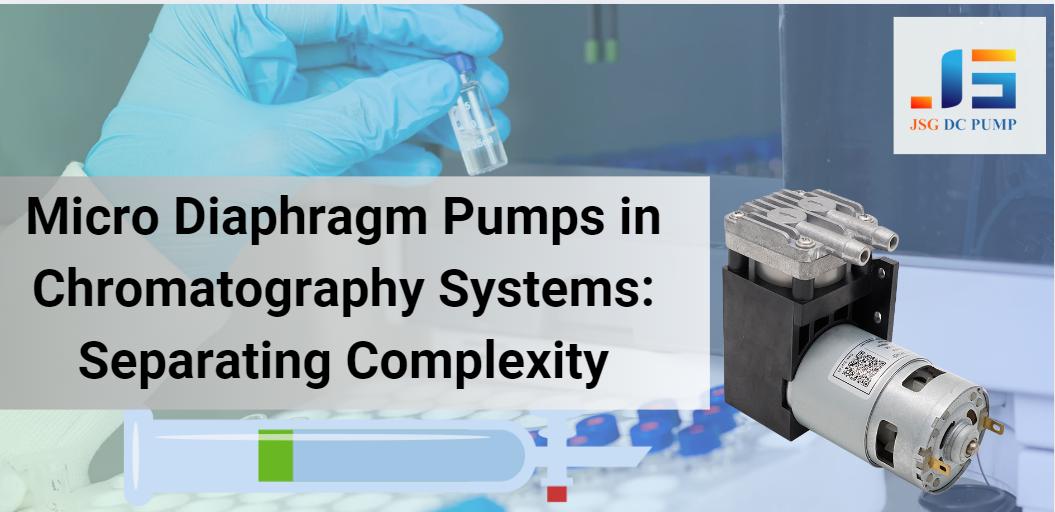
Where Diaphragm Pumps Fit Around Chromatography
Diaphragm pumps can be considered for suitably designed auxiliary functions such as vacuum-assisted degassing or waste handling. These differ from delivering the main mobile phase through an HPLC column.
The main solvent-delivery pump must meet the chromatograph’s pressure, flow accuracy, pulsation and solvent requirements. Do not select a general miniature diaphragm pump for this role without configuration-specific evidence. Identify which circuit needs the pump before selecting its technology.
Validate the Laboratory Operating Cycle
Record flow and pressure or vacuum together, then check current, temperature rise, noise, restart behaviour and repeated operation in the actual mounting arrangement. Include the real tubing, filters, valves, medium and ambient conditions. Continuous operation must be evaluated at the intended load; motor type alone is not a continuous-duty or service-life rating.
Use the micro pump sample validation checklist to organize repeatable measurements. For a vacuum-driven circuit, review the miniature vacuum pump selection guide.
Laboratory Pump Questions
Can one pump handle gas and liquid? Only when the selected configuration is intended and validated for both. Check the permitted medium and liquid carry-over limits; do not infer them from suction capability.
Does an oil-free pump provide sterile transfer? No. The complete fluid path and relevant cleaning or filtration process require their own verification.
What if the required flow is unknown? Describe the function, volume to move and desired time. For a vacuum chamber, provide chamber volume and target working vacuum if known.
Ask for Help With Laboratory Pump Selection
Tell us what the pump needs to do. It is OK if specifications are incomplete. Useful starting points are the medium, flow at pressure or vacuum, and operating cycle. A short functional description is enough to start.
Ask for Pump Selection Help — emily@dc-pump.com
