

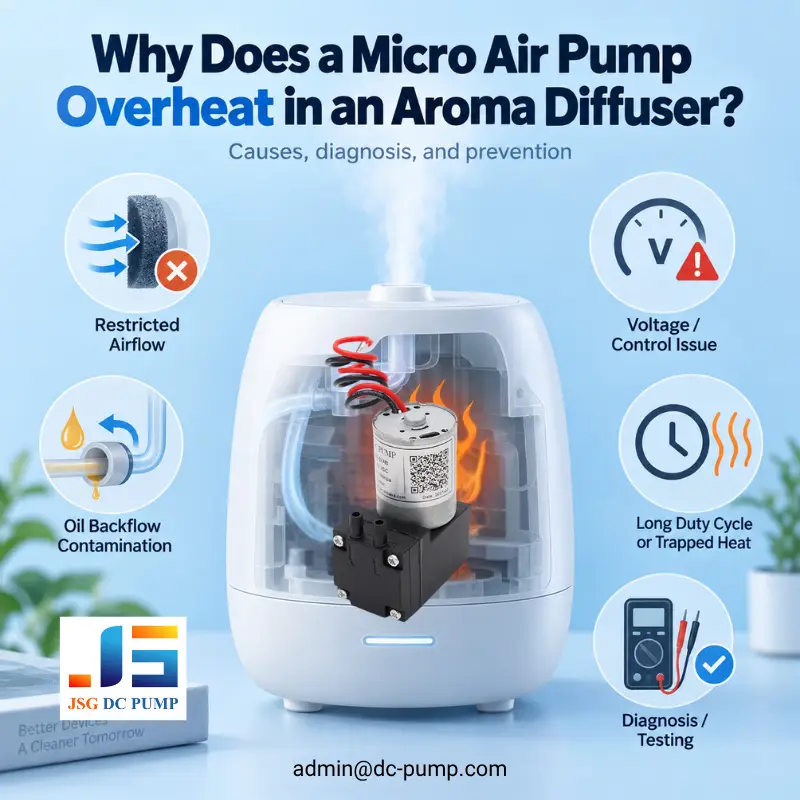
Micro air pump overheating in an aroma diffuser may appear only after several minutes of operation. The diffuser may work normally at first, but then the pump becomes hot, the fragrance mist weakens, or the unit shuts down.
A micro air pump usually overheats in an aroma diffuser because restricted airflow, incorrect electrical input, an excessive duty cycle, poor enclosure cooling, or fragrance-oil backflow pushes it beyond its intended operating conditions.
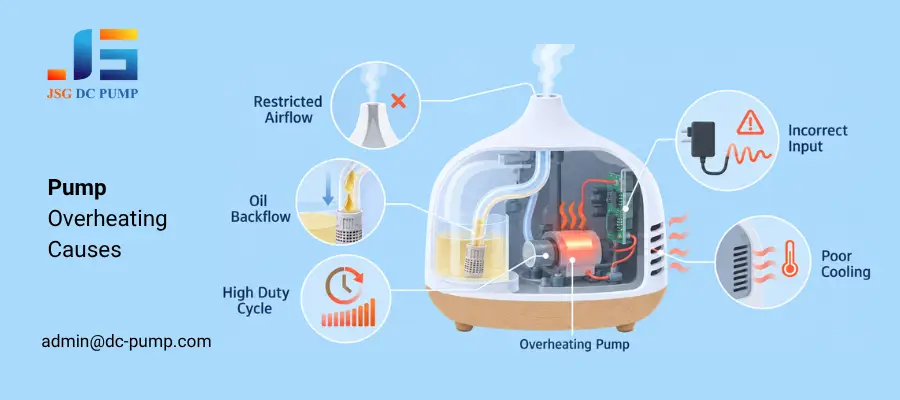
As an engineer with many years of experience in micro air pump applications, I have found that diffuser overheating is rarely caused by the pump alone. The real fault often lies in the air path, electrical controls, operating cycle, or enclosure. This article explains how I identify the cause and prevent unnecessary replacement.
What Does Micro Air Pump Overheating Mean?
You may find the housing warm but be unsure whether it is normal. Acceptable heat varies with the pump, load, duty cycle, and environment.
Micro air pump overheating means exceeding the specified thermal range or developing heat-related performance problems. It should be judged through repeatable measurements and operating behavior, not touch alone.
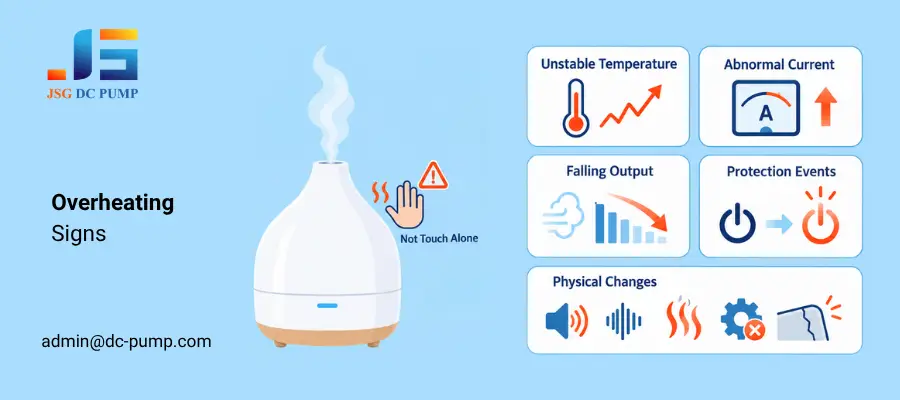
Unstable temperature: Temperature continues rising instead of stabilizing.
Abnormal current: Current exceeds its limit or rises with heat.
Falling output: Airflow and fragrance mist gradually weaken.
Protection events: The diffuser restarts after cooling.
Physical changes: Noise, vibration, odor, startup, or plastic appearance changes.
How Can Airflow Restrictions Cause Micro Air Pump Overheating?
Your diffuser produces weak mist while the pump becomes hot. However, a small air-path restriction rather than a defective pump may be creating the load.
Airflow restrictions can cause overheating by increasing system resistance, changing the pressure-flow point, or extending operating time. Excess heat develops when these conditions exceed the pump’s approved limits.
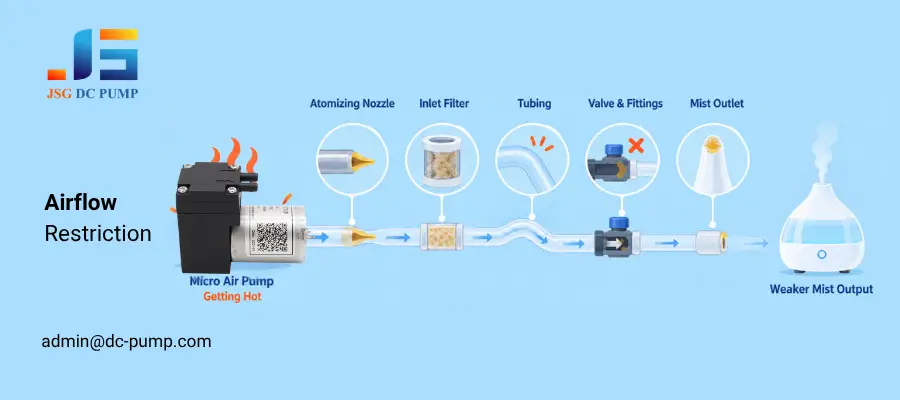
Atomizing nozzle: Thick or aged oil narrows the calibrated opening.
Inlet filter: Dust or oil vapor reduces incoming airflow.
Tubing: Kinks, compression, or sharp bends create pressure loss.
Valve and fittings: Wrong direction, blockage, or narrow passages add resistance.
Mist outlet: Residue prevents compressed air from escaping normally.
How Do Voltage and Control Settings Affect Pump Temperature?
The air path may be clear, yet the pump still heats rapidly or struggles to start. Replacing it before checking the electrical input may not help.
Voltage and control settings affect temperature by determining motor speed, current, startup behavior, and electrical losses. Terminal voltage, startup current, PWM settings, and protection limits must match the pump.
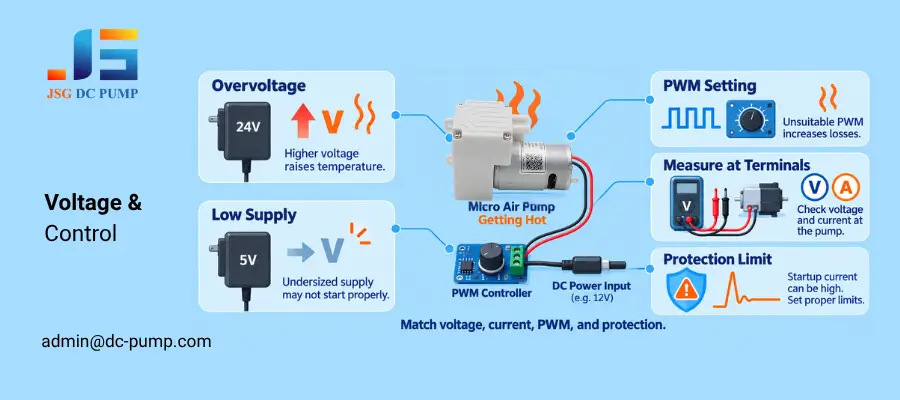
I measure voltage and current at the pump terminals during startup and steady operation because wiring, converters, and controllers can alter the input. Overvoltage increases winding heat, while an undersized supply can cause incomplete starts. Unsuitable PWM can also increase losses. Never operate outside the approved voltage range to change mist output.
How Do Duty Cycle and Enclosure Design Affect Heat?
A pump may remain stable on an open bench but overheat inside the diffuser, especially during long programs or at high ambient temperatures.
Duty cycle and enclosure design affect heat by controlling its generation and release. Long operation, insufficient rest time, inadequate ventilation, nearby electronics, or acoustic materials can cause heat to accumulate.
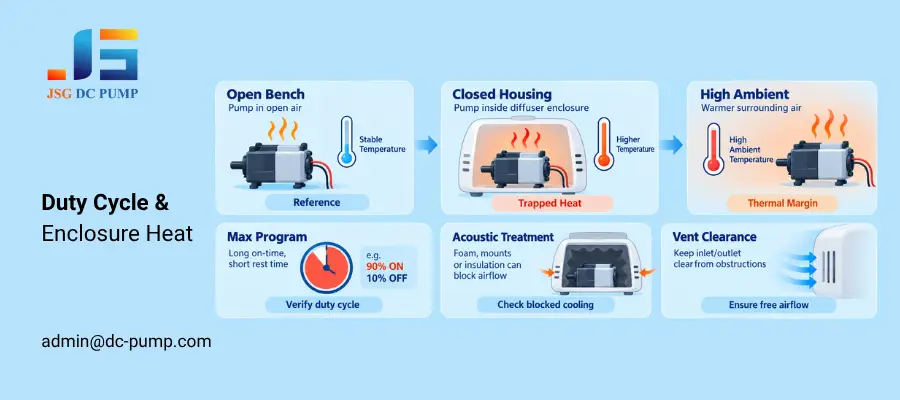
| Test Condition | What Is Compared | Purpose |
| Open bench | Temperature under the intended load | Establishes a reference |
| Closed housing | Temperature with final components | Identifies trapped heat |
| Maximum program | Longest on-time and shortest rest | Verifies duty cycle |
| High ambient | Operation at the environmental limit | Checks thermal margin |
| Acoustic treatment | Mounts, foam, and clearance | Checks blocked cooling |
How Can Essential Oil Damage the Air Pump?
After a diffuser is tilted or refilled, its pump may become noisy, difficult to start, or hot. Fragrance oil may have entered the air path.
Essential oil can damage a micro air pump by contaminating the valves and diaphragm, reducing sealing, increasing resistance, or reacting with incompatible materials. Liquid entry is not a normal operating condition.
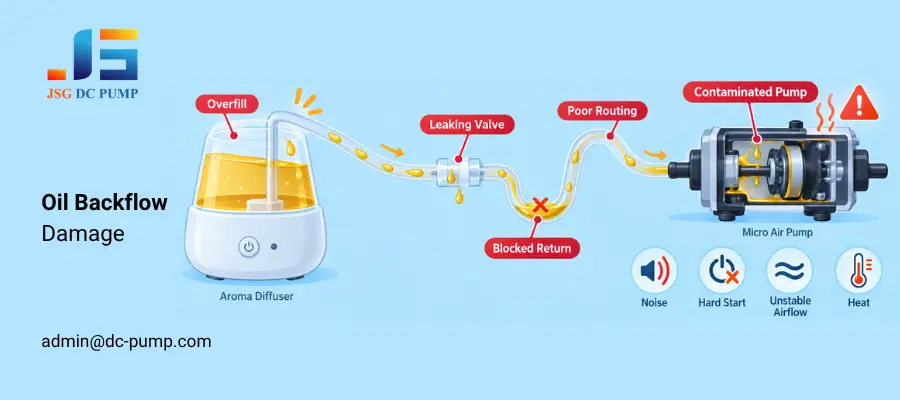
Oil can reach the air pump in a scent diffuser through overfilling, a leaking check valve, a blocked oil return, or poor tube routing. I check for visible oil, delayed startup, unstable airflow, and noise, then verify material compatibility with the fragrance formulation. Correct routing, check valves, liquid traps, and oil-return structures should keep oil away from the pump.
How Is Micro Air Pump Overheating Diagnosed?
Replacing a hot pump may seem effective, but the new pump can overheat if the original system fault remains.
We diagnose an overheating micro air pump by testing each part of the complete system separately. Only one variable should change at a time so the true cause can be identified.
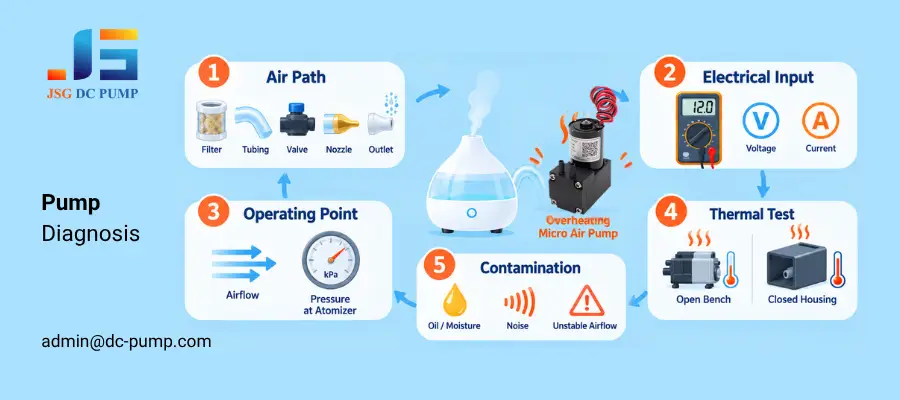
Inspect the air path: Check the filter, tubing, valve, nozzle, and outlet.
Measure electrical input: Record startup and running voltage and current.
Confirm the operating point: Measure airflow and pressure at the atomizer.
Compare thermal conditions: Test on the bench and inside the housing.
Inspect contamination: Look for oil, startup difficulty, noise, or unstable flow.
How Can We Prevent Micro Air Pump Overheating in Production Designs?
A prototype may pass a short test but overheat during extended use. Changes in components, oil, assembly, software, or ambient conditions can expose hidden problems.
We prevent overheating by validating the pump and diffuser as one system under normal, boundary, and fault conditions. The approved design must then be transferred into production with measurable limits.
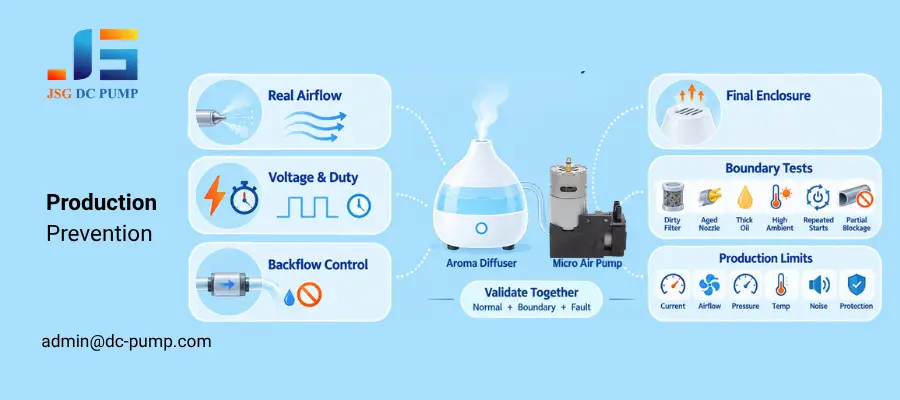
Prevention begins with defining airflow at the real atomizer pressure, confirming voltage and duty cycle, preventing backflow, and testing the final enclosure. I also validate aged nozzles, dirty filters, thick oils, high ambient temperature, repeated starts, and partial blockage. Production limits should cover current, airflow, pressure, temperature rise, noise, and protection response, while approved components, software, and test methods remain controlled.
Conclusion
A micro air pump usually overheats because airflow, electrical input, duty cycle, enclosure cooling, or oil separation has moved outside the intended conditions. Checking these factors in sequence distinguishes a pump defect from an integration problem and prevents the replacement pump from failing for the same reason.
Developing a pump-driven aroma diffuser? Send the airflow, pressure, voltage, duty cycle, ambient temperature, enclosure space, and oil-separation design to admin@dc-pump.com. JSG DC PUMP will recommend a practical micro air pump solution for prototype validation.
