

Micro pump testing is essential for verifying performance in OEM applications. A pump may meet its published specifications but deliver insufficient flow under load, experience unstable startup, or generate excessive noise after installation. These problems often appear during equipment integration, when replacing or modifying the pump becomes more costly.
JSG tailored micro pump testing to each individual operating condition of customers. Our engineers measure flow, pressure, vacuum, electrical, noise and durability, under specified conditions. The idea is to check the performance of the pump at the working point desired before the customers islethe pump in his instrument.
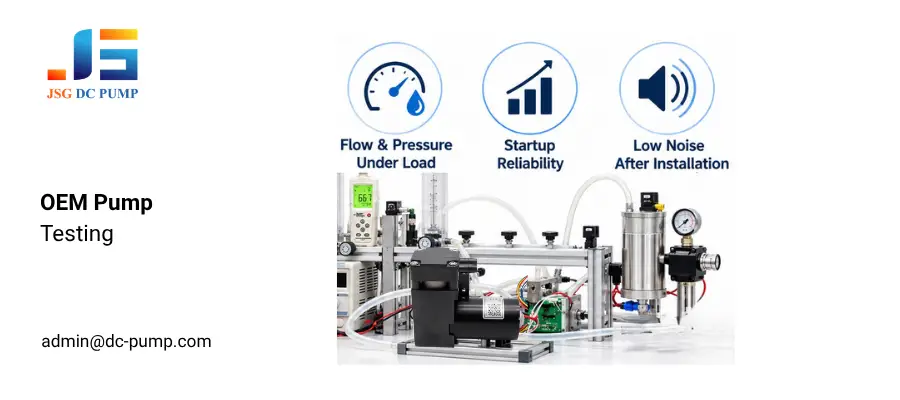
Up until now for years, I’ve been working as a micro pump engineer, and what I have learnt is that maximum specifications tell you very little. The relationship between pump and system performance is more important. At JSG, we have specialized test benches as well as multi-station testers to assess performance and facilitate OEM customization.
Why Do OEM Projects Require Custom Micro Pump Testing?
A vacuum pump may reach its rated ultimate vacuum but deliver insufficient airflow through a restrictive filter. A pressure pump may reach its maximum pressure while producing almost no flow. Selecting a pump using these maximum values alone can lead to disappointing results.
Custom micro pump testing helps engineers verify whether a pump meets the actual operating requirements of an OEM device. Instead of relying entirely on standard specifications, testing focuses on the required flow, working pressure or vacuum, and electrical conditions.
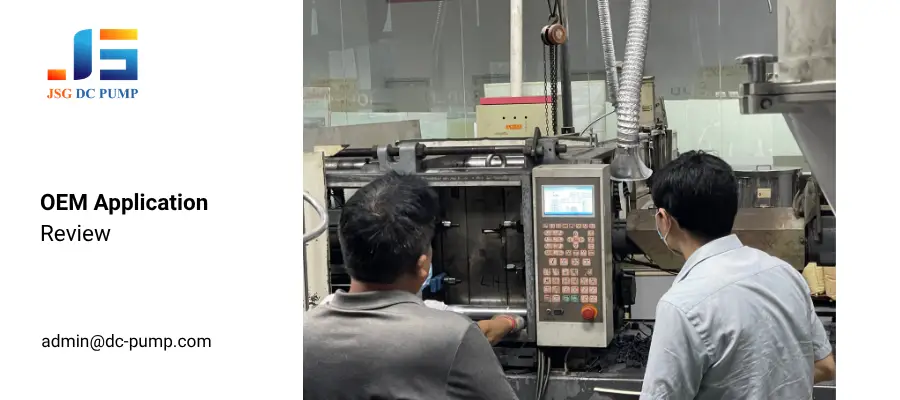
The key is to reproduce the application’s operating point. Tubing resistance, filter pressure drop, supply voltage, and duty cycle can all change pump behavior. Engineers should measure these factors before finalizing the pump selection. A suitable pump must perform reliably within the complete system, not just on an unrestricted laboratory bench.
How Does JSG Plan Micro Pump Testing for OEM Projects?
Two customers may use the same micro pump model in completely different applications. One requires intermittent vacuum generation, while another needs stable airflow through a sampling filter. A single standard test cannot fully evaluate both operating conditions.
JSG develops application-specific testing plans by reviewing customer requirements and defining measurable acceptance criteria. Our engineers determine which parameters must be evaluated and select the appropriate test conditions before testing begins.
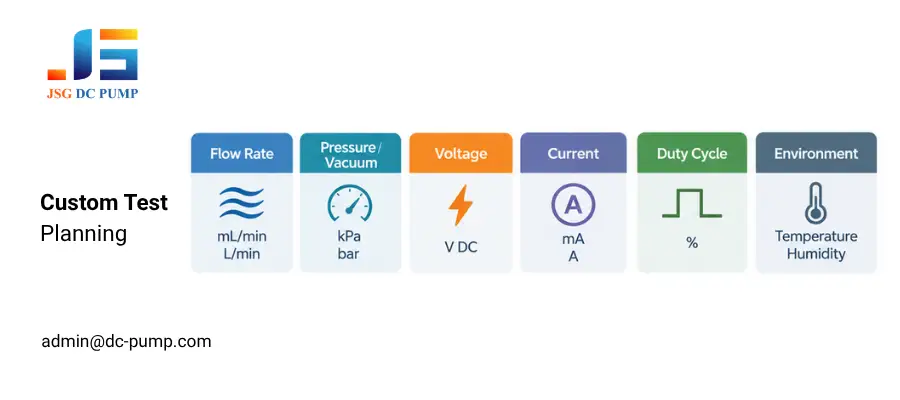
The following parameters establish the foundation of a custom testing plan:
| Parameter | Testing Focus |
| Flow Rate | Required flow under operating load |
| Pressure / Vacuum | Target working level |
| Voltage | Nominal and permitted voltage range |
| Current | Operating and startup current |
| Duty Cycle | Running duration and restart frequency |
| Environment | Temperature, medium, and installation conditions |
How Does Micro Pump Testing Verify Flow, Pressure, and Vacuum?
A pump with a high free-flow rating may deliver significantly less flow when connected to narrow tubing or a restrictive filter. Similarly, maximum pressure and maximum flow cannot be treated as simultaneous operating values. Misunderstanding this relationship can lead to incorrect pump selection.
JSG uses performance test benches and measurement instruments to evaluate flow, pressure, and vacuum under controlled conditions. Our engineers apply different loads and record the resulting performance to determine whether the pump meets the customer’s operating requirements.
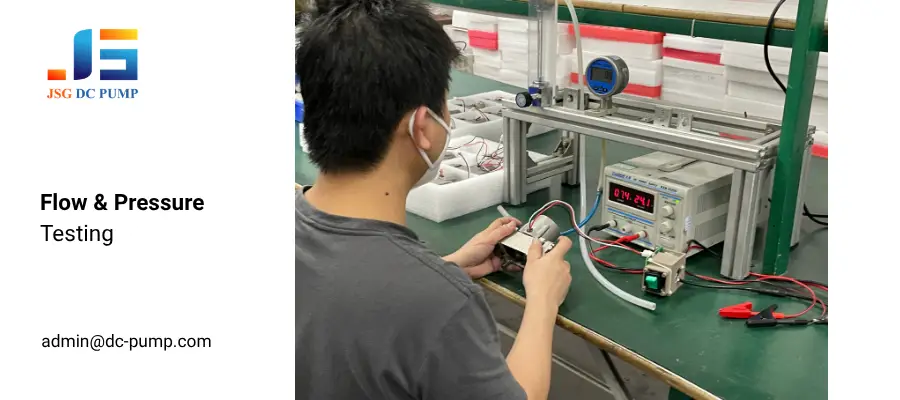
Key measurements include:
1. Free-Flow Performance: Establish the flow reference under minimal restriction.
2. Working-Point Flow: Measure actual flow at the required pressure or vacuum.
3. Pressure/Vacuum Characteristics: Evaluate performance changes as operating load increases.
4. Performance Stability: Check whether readings remain consistent under defined conditions.
5. System Verification: Compare bench results with the customer’s actual tubing and filtration configuration.
How Does JSG Verify Electrical Performance and Startup Reliability?
A micro pump may operate normally with a regulated laboratory supply but struggle when connected to the customer’s controller. Voltage drops, limited current capacity, and existing pressure loads can affect motor startup and running stability.
JSG evaluates electrical behavior under specified operating conditions to determine whether the pump is compatible with the intended power supply. Electrical measurements are considered alongside flow and pressure performance because motor behavior directly influences pump output.
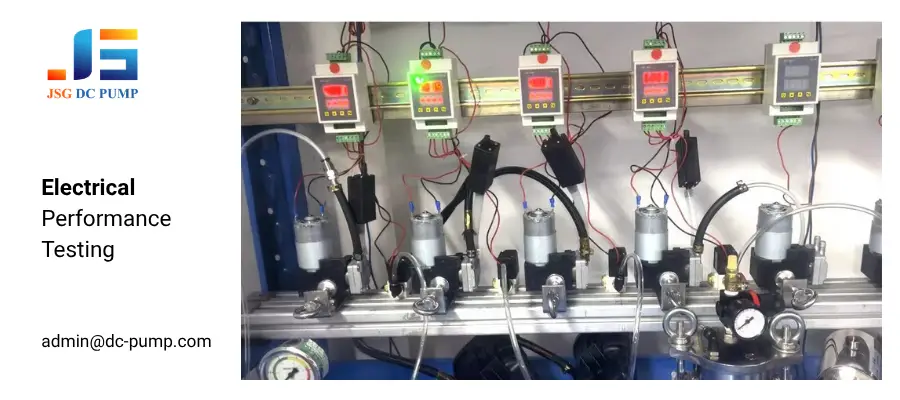
Depending on the application, electrical verification includes:
1. Operating Current: Measure current consumption at the required working load.
2. Startup Current: Evaluate electrical demand when the motor begins running.
3. Voltage Variation: Check performance across the permitted supply range.
4. Loaded Restart: Verify startup against representative pressure or vacuum.
5. Power Consumption: Assess electrical demand against the customer’s system limits.
How Does JSG Evaluate Noise, Temperature, and Operating Stability?
A micro pump may meet its flow requirements but generate excessive noise once installed inside equipment. Enclosure resonance, mounting arrangements, and prolonged operation can introduce problems that are difficult to identify through basic performance testing.
JSG considers noise, temperature, and operating stability according to the application’s requirements. Appropriate testing conditions help engineers distinguish pump-related behavior from the effects of installation and operating load.
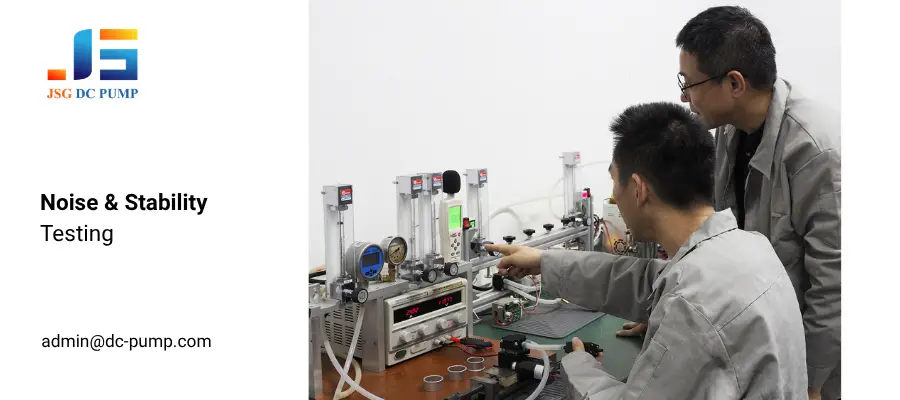
Important evaluation factors include:
1. Noise Level: Measure sound under defined voltage, load, and distance conditions.
2. Vibration: Examine mechanical vibration and its transmission through mounting components.
3. Temperature Rise: Monitor temperature changes during representative operation.
4. Running Stability: Check for unexpected changes in flow, current, or noise.
5. Installation Effects: Verify critical results inside the finished equipment.
How Does JSG Conduct Durability and Multi-Station Pump Testing?
A pump may meet every requirement during initial testing but lose performance after repeated operation. Diaphragm fatigue, valve wear, sealing changes, and motor deterioration can gradually affect flow, pressure, and electrical behavior.
JSG uses multi-station testing equipment to operate and monitor multiple pump samples under defined conditions. Test duration, operating load, duty cycle, and sample quantity are determined according to the project’s evaluation requirements.
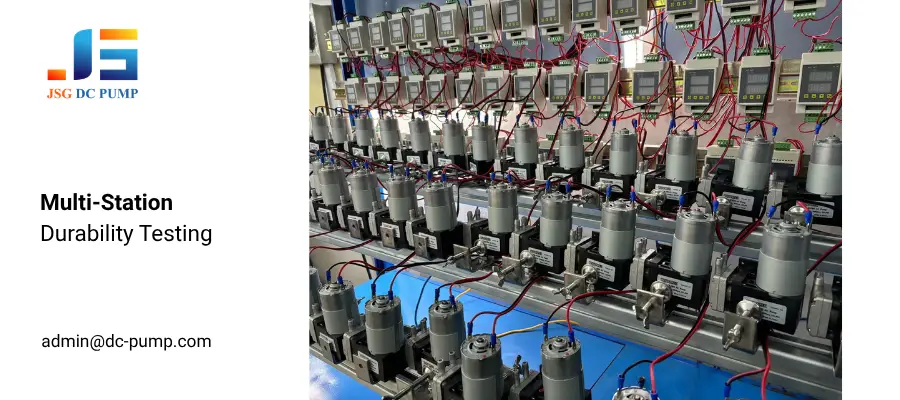
Durability evaluation focuses on:
1. Operating Duration: Run samples for the agreed testing period.
2. Start-Stop Cycles: Evaluate performance after repeated startup and shutdown.
3. Performance Retention: Compare flow, pressure, and vacuum before and after testing.
4. Electrical Changes: Monitor current variation that may indicate developing problems.
5. Sample Consistency: Compare results between tested units under equivalent conditions.
Durability conclusions must reflect the actual test conditions and acceptance limits. Completing a specified number of hours alone does not guarantee the pump’s lifetime in every application.
Conclusion
Custom micro pump testing is essential for verifying performance under real operating conditions. By evaluating flow, pressure, vacuum, electrical behavior, noise, and durability, engineers can identify potential problems before production. The key is to match the pump’s actual working point and verify its reliability within the complete OEM system.
At JSG, we combine engineering experience with dedicated testing equipment to support customized micro pump solutions. Whether you are developing a new device or improving an existing design, our team can help evaluate your requirements and recommend a suitable testing approach. Contact us at admin@dc-pump.com with your application details, target flow, working pressure or vacuum, and operating voltage to discuss your project.
