

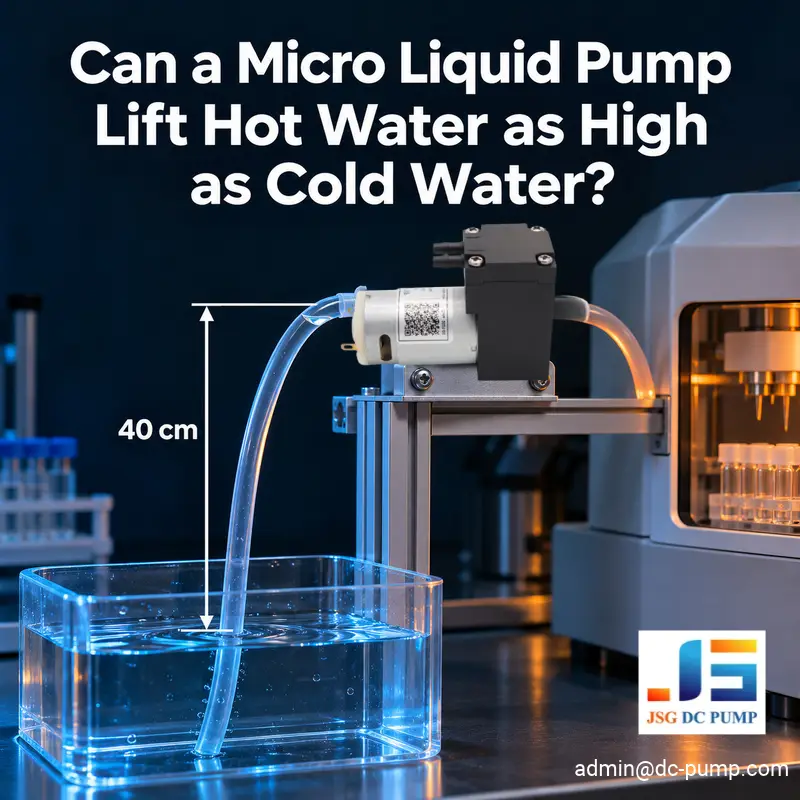
A micro liquid pump sits 40 cm above the rinse tank in a benchtop analyzer. With cold water, it delivers the full rinse volume. After an hour of heated standby, the first rinse comes up short. The second runs normally. Should the engineer lower the pump?
A micro liquid pump can lift hot and cold water through the same installed height if it is rated for the liquid temperature and has enough pressure available at its inlet. Hotter water reduces the theoretical maximum suction lift. A 40 cm installation may still work at both temperatures.
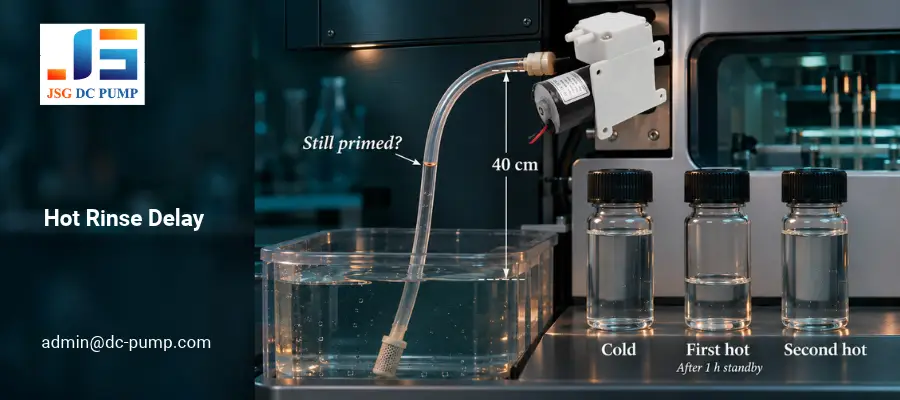
As a JSG engineer, I’d watch the inlet tube before moving the bracket. Was it still full when the hot rinse started? If water drained back during standby, the motor could start on time while the nozzle spends the first few seconds of a ten-second rinse waiting for water.
When Does a Micro Liquid Pump Need to Prime Again?
After a reservoir change
Removing the tank can expose the pickup and admit air. On the next start, the pump has to draw water back through the inlet. A bench test that begins with a full tube skips this part of the cycle.
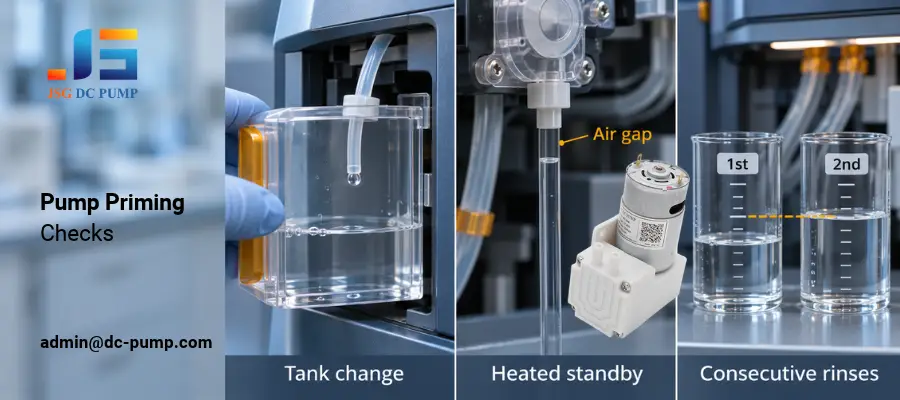
After heated standby
A temperature-rated transparent section near the pump lets you see whether the water column holds while the machine is idle. Watch it when the motor stops, then check again just before restart. A short air gap near the pump is easy to miss once water starts moving.
Between consecutive rinses
Collect the second rinse separately. If it reaches the target volume at the same temperature and tank level, the pump can deliver a full hot rinse at that mounting height. The remaining question is what delayed or reduced the first delivery.
Why Does Hot Water Reduce Suction Lift?
In a vented tank, atmospheric pressure acts on the water surface. As the diaphragm draws back, pressure inside the pump chamber falls and water rises through the inlet tube. Hot water has a higher vapor pressure, so vapor can form at the inlet with a smaller drop in pressure.
| Water temperature | Water vapor pressure, absolute | Pressure difference available at sea level* |
| 20°C | 2.3 kPa | 99.0 kPa |
| 60°C | 19.9 kPa | 81.4 kPa |
| 80°C | 47.4 kPa | 53.9 kPa |
| 90°C | 70.2 kPa | 31.1 kPa |
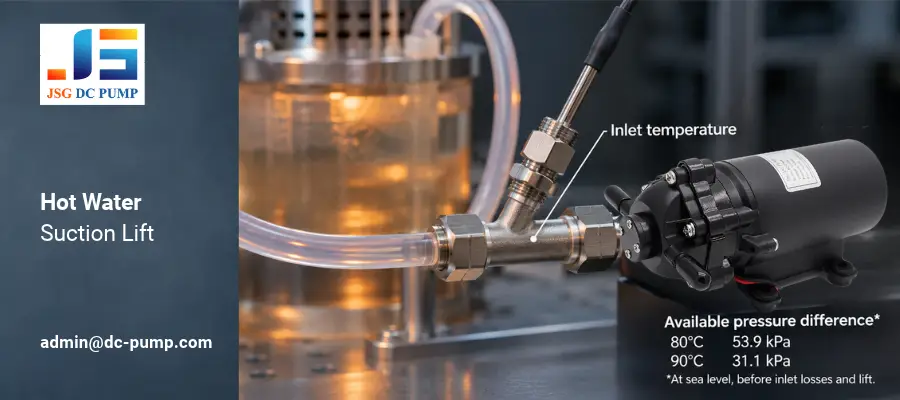
Values assume atmospheric pressure of 101.3 kPa, before allowing for vertical lift or inlet losses. Water properties are from the Hydraulic Institute.
Look at the change from 80°C to 90°C. Those last ten degrees reduce the available pressure difference by about 23 kPa. That makes the temperature at the pump inlet worth measuring. After standby, water sitting in the hose may reach the pump at a different temperature from the water beside the heater sensor.
Should You Lower the Micro Liquid Pump?
First, measure from the lowest working water level to the center of the pump inlet. A drawing that shows 40 cm from the top of the tank can understate the lift when the reservoir is nearly empty.
If the inlet drains during standby, leave the bracket where it is and repeat the hot start with the line primed. Keep the temperature, tank level and rinse time the same. If the first drop now arrives promptly and the dose recovers, inspect the inlet joints and check valves for a loss of prime.
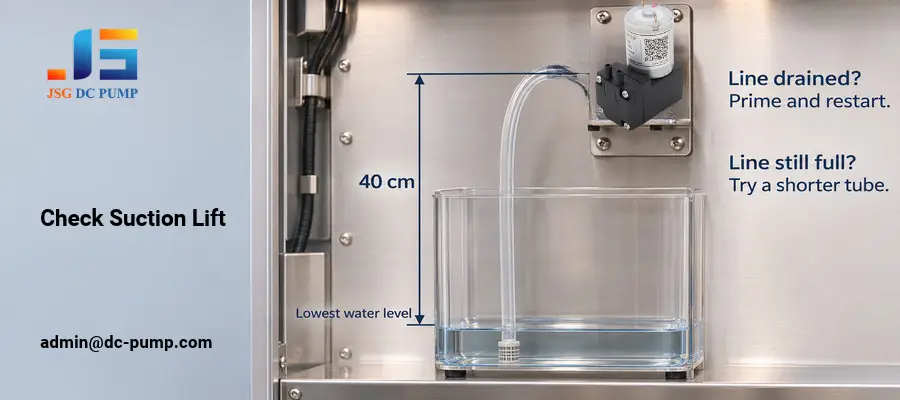
If the line stays full, a shorter inlet tube is a useful comparison. Keep the same bore, fittings and vertical height. An improvement with the shorter tube gives you a plumbing change to evaluate before redesigning the mounting bracket.
Which Micro Liquid Pump Ratings Matter for Hot Water?
Start with the permitted liquid temperature. A cool motor housing tells you little about the temperature of the water held against the diaphragm and valves throughout standby.
For example, the JSG-03WB brushless diaphragm water pump lists water flow up to 500 mL/min, maximum inlet vacuum of −30 kPa and an ambient range of 5–45°C. The temperature range applies to the surrounding air. JSG asks customers to confirm the intended water temperature separately for warm-water service.
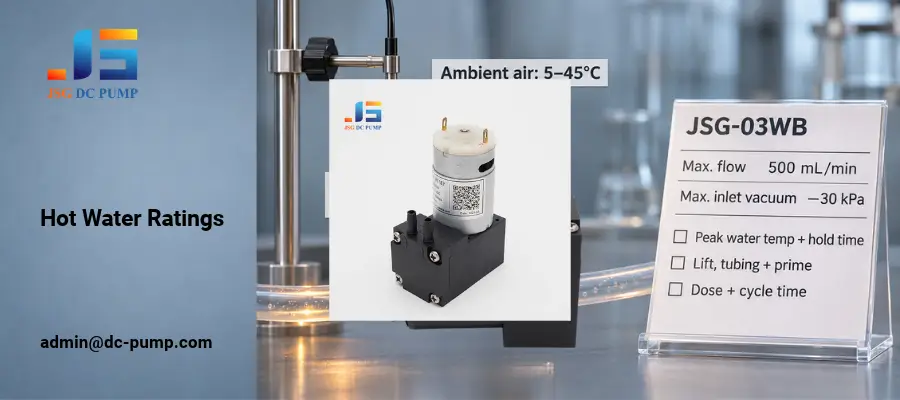
For a sample review, include three details:
- Heat exposure.Peak inlet temperature and how long hot water remains in the pump head.
- Starting condition.Vertical lift, tube dimensions and whether the line starts full or empty.
- Delivery requirement.Milliliters needed at the nozzle and seconds allowed from motor start.
Why Can a Pump Pass Its Flow Test but Miss the First Rinse?
A typical bench check starts the stopwatch once the outlet stream settles. The analyzer starts its timer when it energizes the motor. Both tests can give accurate results while measuring different parts of the cycle.
Watch the nozzle and collect the entire first rinse. A delayed first drop followed by a steady stream points toward time lost during priming. If water appears immediately but the stream stays weak, measure delivery with the production filter, fittings and nozzle in place.
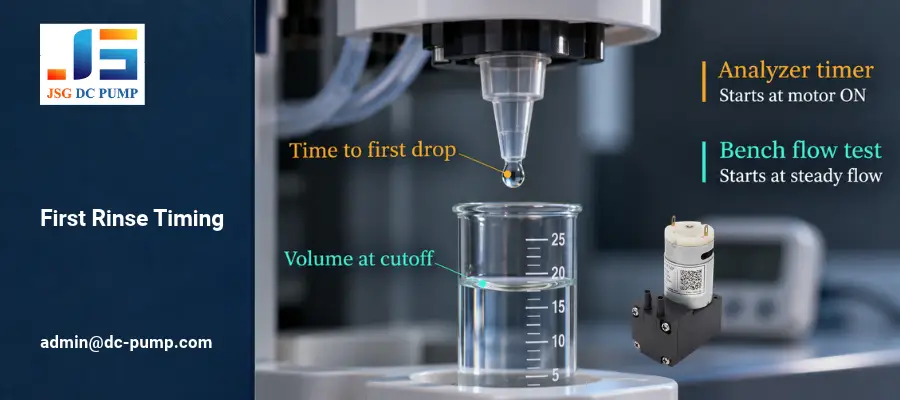
Record time to first water and volume at timer cutoff separately. Together, those observations tell you more about a short rinse than a single flow reading taken after the pump has been running for a minute.
How Should You Test a Micro Liquid Pump After Heated Standby?
Use the production tank and plumbing at the minimum working water level. Keep the mounting position fixed while comparing the three conditions shown in the opening example.
- Cold rinse.Record inlet temperature, first-drop time and total volume.
- First hot rinse.Reproduce the normal heated standby interval. Check the inlet before starting the motor and collect the dose.
- Second hot rinse.Repeat immediately using the same timer. Collect the water in a separate vessel.
- Repeat after standby.Change one inlet condition at a time and see whether the first dose consistently recovers.
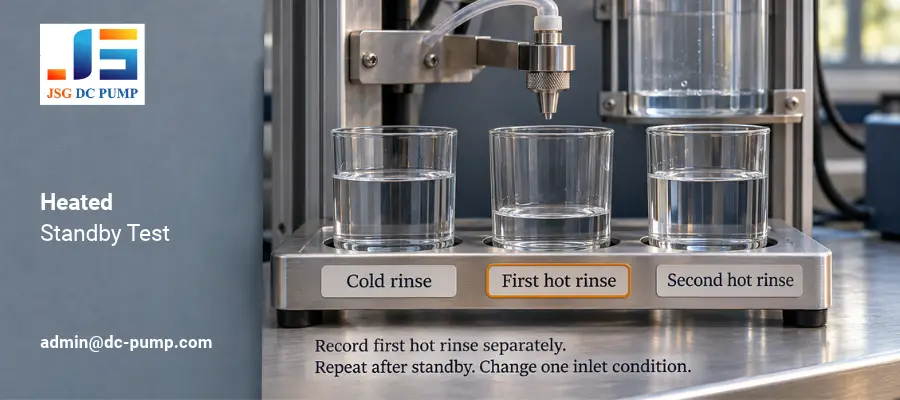
Keep the first hot rinse separate in the test report. Averaging it with several successful rinses can hide the one cycle the equipment needs to pass.
Conclusion
A micro liquid pump can lift hot water to the same installed height as cold water, although rising temperature reduces the available suction margin. Before lowering a pump that misses only the first hot rinse, check whether the inlet retained its prime and time the first drop after standby.
To review a sample from our diaphragm liquid pump range, email admin@dc-pump.com with your water temperature, vertical lift, tube dimensions and required rinse volume. Include the delivery time so we can assess the pump against your actual operating cycle.
