

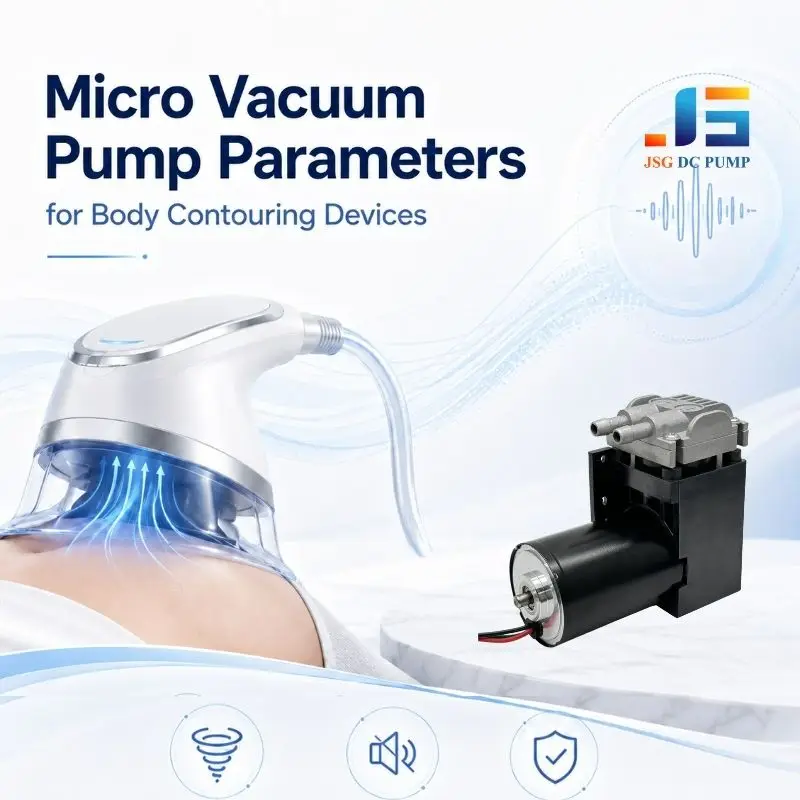
Choosing the wrong Body Sculpting Vacuum Pump can cripple your body contouring device. This leads to unstable suction and poor client results.
The most critical parameters for a Body Sculpting Vacuum Pump are the balance of vacuum level and flow rate, motor reliability, and low noise.
Drawing on JSG DC PUMP’s micro pump engineering and application experience dating back to 2003, we have seen promising device concepts fail because of one small component: the vacuum pump. Engineers often focus on a single datasheet value, such as maximum vacuum, but actual pump performance depends on the balance of multiple parameters. A pump that performs well in laboratory testing may deliver different results after it is connected to applicators, filters, valves, and long tubing. This article explains the key parameters that can affect the performance of a body contouring device, helping engineers develop products that are effective, reliable, and comfortable to use.
How Do Vacuum Level and Flow Rate Affect a Body Sculpting Vacuum Pump?
Your device’s suction may feel weak or inconsistent during treatment. This frustrates operators and can lead to unpredictable client results.
Vacuum level creates the lifting force on the skin, while flow rate helps maintain this force by continuously removing air entering through small leaks.A suitable balance provides strong and stable suction, even when the applicator does not form a perfect seal.
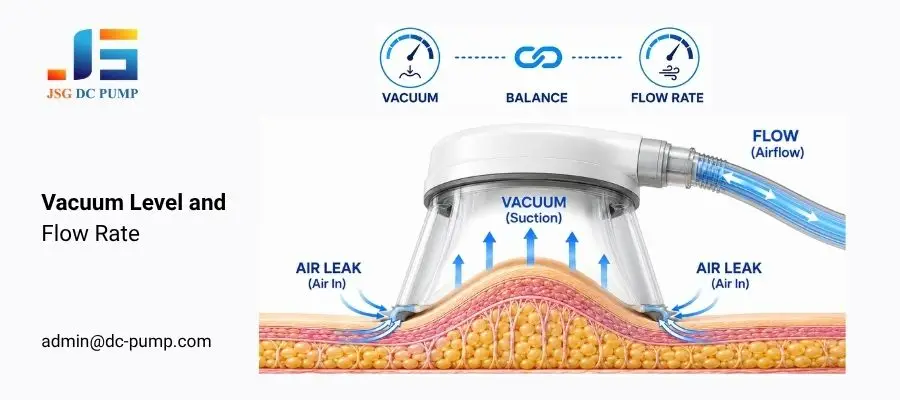
Many engineers treat maximum vacuum as the most important pump parameter, but high vacuum alone cannot ensure stable performance. In a real body contouring system, the applicator rarely forms a perfect seal, and small movements, skin contours, tubing, or valves can introduce air leakage. Without sufficient flow to remove this incoming air, suction strength will drop and become unstable.
Why Does Body Sculpting Vacuum Pump Response Speed Matter?
Your device’s pulsed massage mode may feel slow or ineffective. This can produce an uncomfortable experience and reduce the intended treatment effect.
Fast vacuum response allows the system to reach and release its target pressure quickly.This capability is essential for dynamic treatment cycles, including pulsed suction and lymphatic drainage massage modes. Each pressure pulse should feel controlled, distinct, and repeatable.
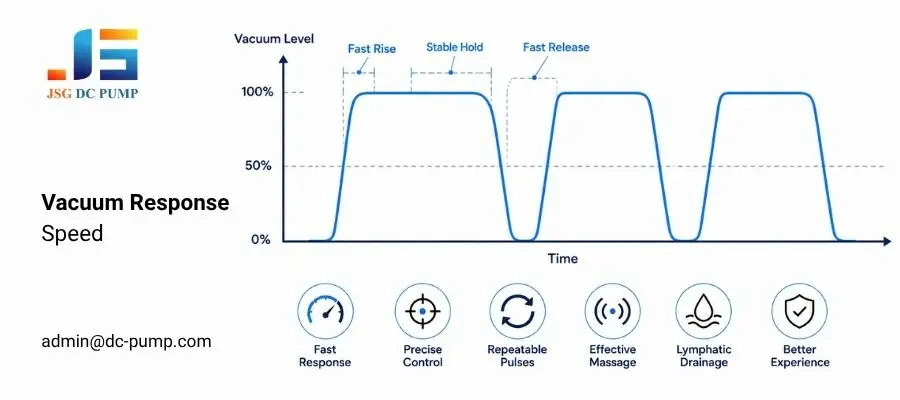
Many body contouring devices use pulsed or dynamic vacuum modes, so the pump must quickly reach, hold, and release the target vacuum. Slow response can make treatment pulses feel weak or inconsistent.
Key factors include:
- motor acceleration and PWM control;
- pump head efficiency;
- chamber and applicator volume;
- tube length and diameter;
- valve response;
- filter resistance.
Engineers should evaluate the complete pneumatic system because narrow tubing, restrictive filters, or oversized chambers can slow even a responsive pump.
How Do Pump Noise and Vibration Affect Body Contouring Treatments?
Your device may function correctly, but operators and clients can still complain that it is too loud.
A quiet and smooth-running pump helps create a more comfortable treatment environment. Low noise and controlled vibration also reinforce the perception of a professional, high-quality device.
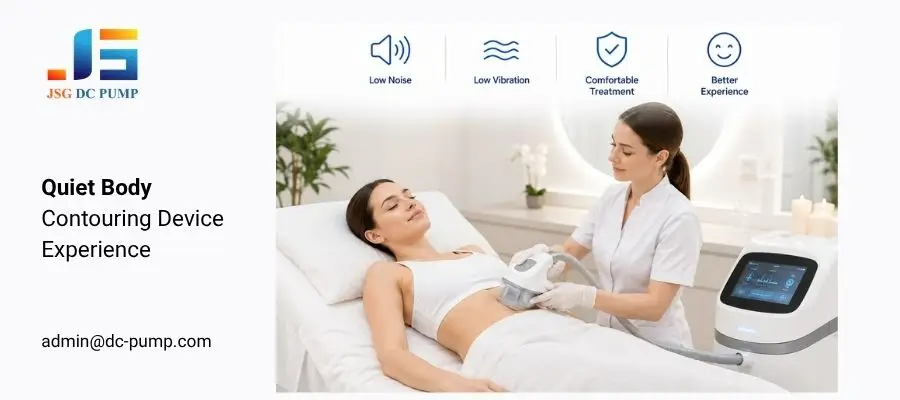
Body contouring devices operate in environments where comfort matters, so excessive noise and vibration can reduce client satisfaction and cause operator fatigue.
Key NVH factors include:
- motor and bearing quality;
- eccentric balance and pump head structure;
- operating speed;
- housing rigidity and internal resonance;
- mounting method;
- tube connections.
Engineers should test the pump inside the complete enclosure because hard mounting, panel resonance, and tube contact can amplify noise. Soft mounts, flexible tubing, balanced structures, and suitable operating speeds help reduce NVH and improve the device’s perceived quality.
Which Motor Improves Body Contouring Vacuum Pump Reliability?
Your pumps may begin failing after extended field use. This leads to dissatisfied customers, warranty claims, replacement costs, and logistical problems.
The motor type directly affects pump lifespan and long-term reliability.Brushless DC motors generally provide a longer operating life because they do not use physical carbon brushes for electrical commutation. This makes them suitable for professional devices that operate for several hours each day.
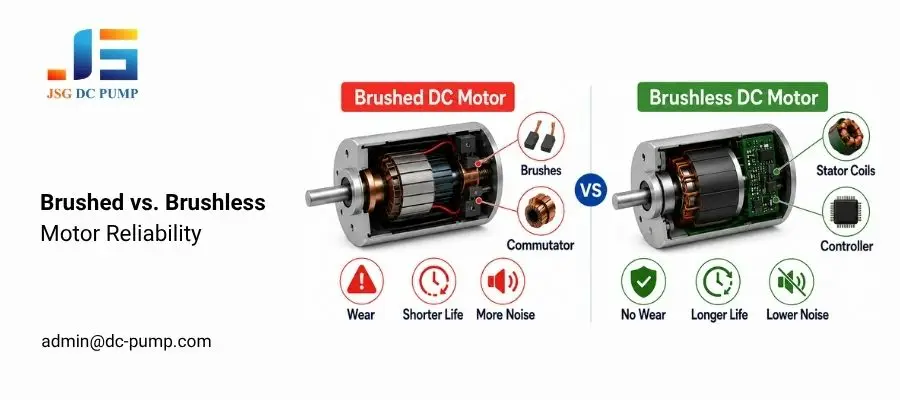
The motor directly affects the micro vacuum pump’s service life. Brushed DC motors use carbon brushes that gradually wear through friction, which can cause unstable speed, electrical noise, or failure. Brushless DC motors use electronic commutation and generally support longer operating cycles.
However, actual lifespan still depends on:
- bearing quality;
- motor temperature and ventilation;
- operating speed and load;
- start-stop frequency;
- duty cycle;
- manufacturing consistency.
Engineers should evaluate daily operating hours, treatment duration, ambient temperature, and maintenance intervals rather than relying only on the nominal lifespan.
How Do Pump Materials Affect Oil, Moisture, and Gas Compatibility?
Unexpected pump failure may occur even when the motor is functioning correctly.
Massage oils, gels, cleaning agents, moisture, and chemical vapors can cause diaphragms or valves to swell, harden, soften, or become sticky. Selecting compatible materials for the diaphragm, valves, pump head, and seals helps prevent chemical degradation and improves long-term pump reliability.
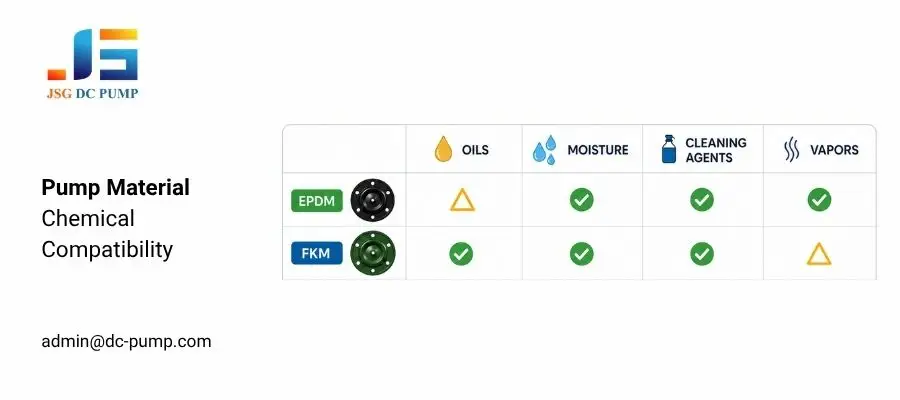
Vapor, mist, moisture, or residue from massage oils, gels, creams, and cleaning agents may enter the vacuum path and damage the diaphragm or valves, causing reduced flow, vacuum, and response speed. Material selection should match the actual medium:
- EPDM suits water, moisture, and many cleaning environments but has limited oil resistance;
- FKM offers stronger resistance to oils and aggressive chemicals;
What Practical Steps Should Engineers Follow When Selecting a Pump?
Your body contouring system needs stable suction under real load, not simply the deepest vacuum.
A suitable pump platform should balance working vacuum, airflow, response time, motor life, vibration, temperature rise, and structural integration. For different body contouring designs, BD-04VB, BD-07VB, BD-07VB-M, and BD-079VB-M can be evaluated according to the applicator size, pneumatic resistance, treatment mode, and required performance reserve.
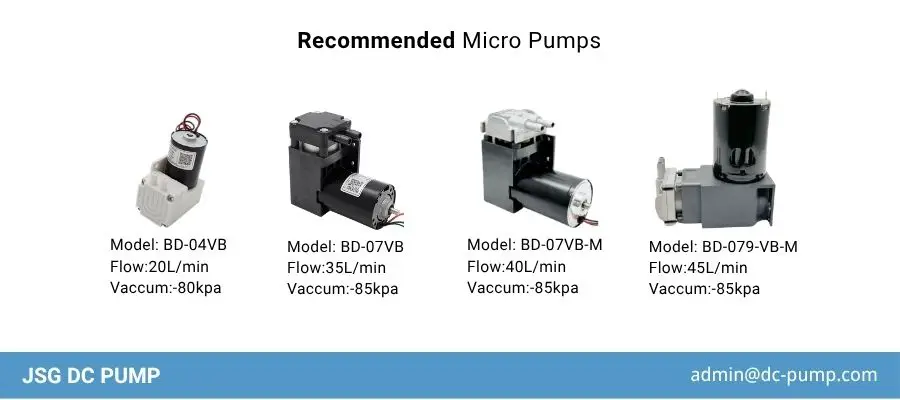
| System Requirement | Pump Selection Direction | JSG Reference |
| Compact structure with moderate airflow and stable suction | Brushless diaphragm vacuum pump | BD-04VB |
| Larger applicator requiring stronger airflow and deeper vacuum | Brushless piston vacuum pump | BD-07VB |
| Limited installation space with enhanced vacuum performance | Compact enhanced piston vacuum pump | BD-07VB-M |
| Faster vacuum recovery under higher leakage or tubing resistance | High-flow piston vacuum pump | BD-079VB-M |
Conclusion
The key parameters are working vacuum, flow rate, response speed, reliability, noise, material compatibility, and system control. Engineers should prioritize balanced real-world performance over maximum vacuum alone.
For micro vacuum pump selection, prototype testing, or application support, contact JSG DC PUMP at admin@dc-pump.com. Our engineering team can help you evaluate the right pump according to your applicator, tubing, treatment cycle, installation space, and performance requirements.
